CASHMERE / INNER MONGOLIA, CHINA
Cashmere, across Inner Mongolia.
From Albas goats in Ordos to Hanshan white cashmere goats around Chifeng, a fine fibre carries the work of a place, a season and generations of selection.

01 /
The fibre beneath the coat.
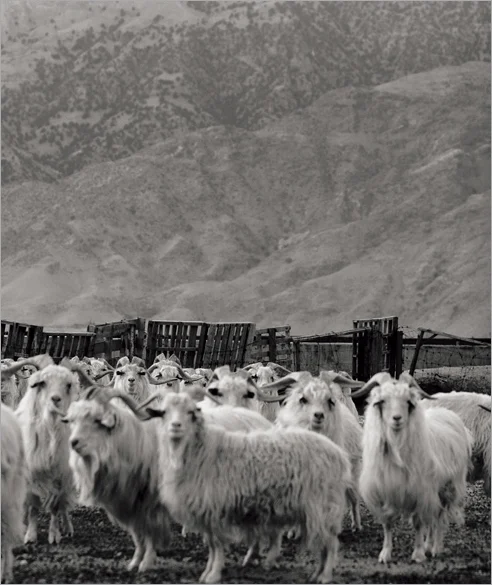
Cashmere is the fine undercoat of a goat, beneath the longer protective outer hairs. What looks like a single coat on the animal contains two very different materials. Preparing cashmere means recovering that fine layer and separating it from the coarser hair.
Cashmere begins with this fine undercoat, carefully collected and separated from the outer hair.
Sources: C01
02 /
One region. More than one cashmere story.
Across Inner Mongolia, pastoral landscapes and breeding traditions vary. Albas cashmere goats are closely associated with Ordos; Hanshan white cashmere goats with the region’s east, including Chifeng and parts of Tongliao.
Behind each name are local herds, seasons of care and choices about the fleece. Following the two breeds brings those differences into view.
03 /
Albas: the Ordos chapter.
The Albas white cashmere goat is associated with the cold, semi-arid grasslands of Ordos. Its development reflects both adaptation to its surroundings and the choices made through selective breeding.
Research on Albas cashmere examines how the fine undercoat grows and how fibre diameter and length develop. Breeding, seasonal care and fleece selection shape the material over successive years.
04 /
Hanshan: a white-fibre story in the east.
Around Chifeng and parts of Tongliao, the Hanshan white cashmere goat tells a different regional story. It was developed through joint breeding work involving local stations and pastoral areas, and formally named in 1995.
Chifeng’s agricultural description highlights the breed’s long, white cashmere fibres, their strength and lustre. These are valuable qualities to consider alongside fineness. A material needs more than a soft first impression: fibre length and preparation also matter as it moves towards yarn.
Together, Ordos and the eastern pastoral regions give Inner Mongolia’s cashmere a richer geography: different herds and breeding histories, with attention returning to the fibre itself.
05 /
Working with the season.
Cashmere growth follows a seasonal cycle, with shedding in spring. Harvesting is timed around the animal and local conditions. In Inner Mongolia, shearing is common, with the timing and handling shaped by local husbandry practice.
For Hanshan goats, local guidance describes grazing with supplementary feeding and a shearing-and-appraisal period in May and June. The next season’s fibre is connected to everyday work long before that moment arrives.

06 /
Revealing the cashmere.
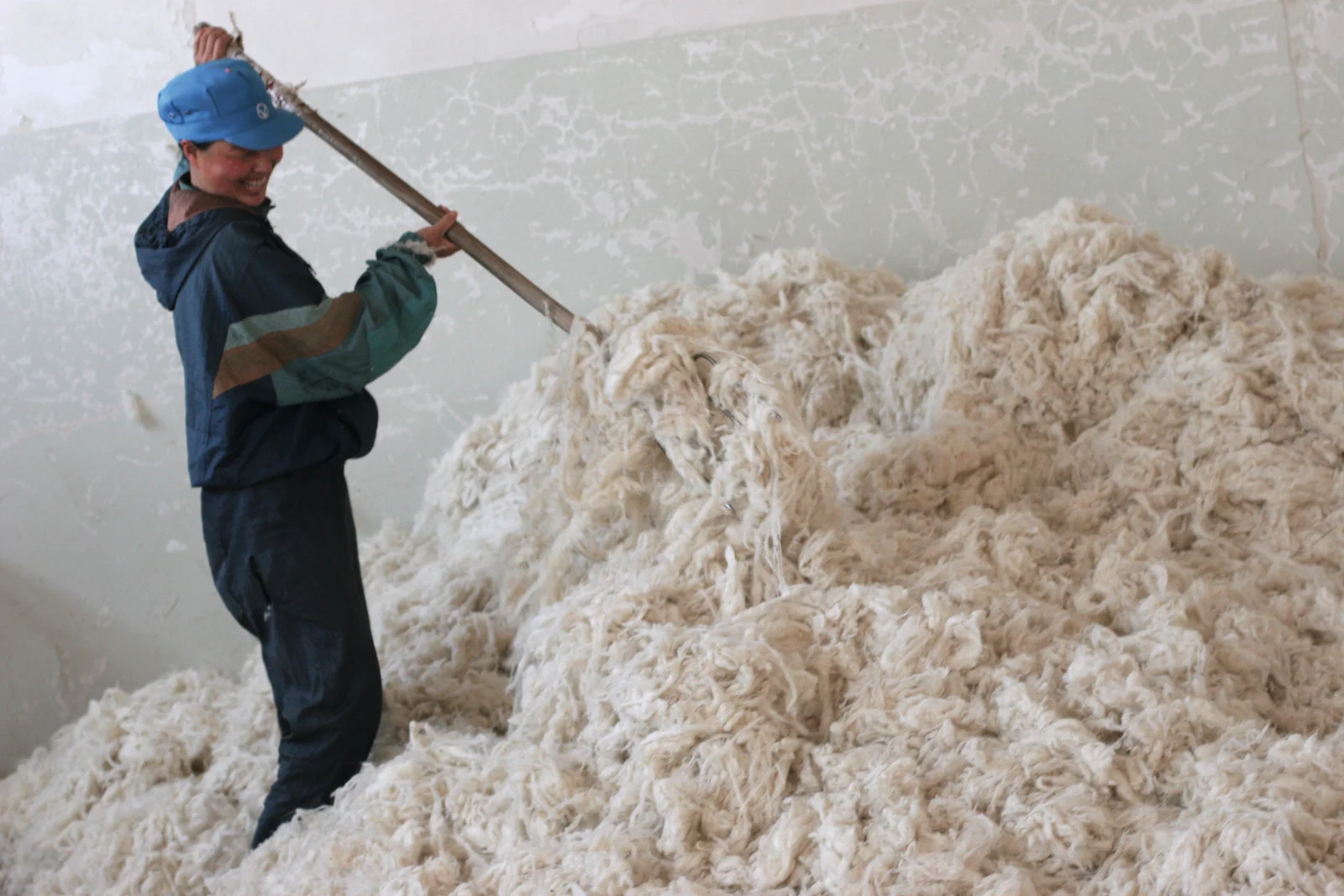
The harvested material is sorted, cleaned and dehaired. Cleaning removes dirt and other impurities; dehairing separates the fine undercoat from the coarser protective hairs. The loose material becomes more uniform and ready for the next stages of preparation.
Raw fleece and prepared cashmere show the work of sorting, cleaning and separating the fine fibres.
Sources: C03
07 /
What we look for in the material.
At LuMiao, the material conversation brings these details together: fineness, length, colour, preparation and the feel of a physical sample. They help us discuss the yarn and surface a brand wants to develop.
Understanding the origin gives that conversation depth. Looking closely at the fibre gives it a practical starting point.
Sources & reading
- C01Cashmere and Camel Hair Manufacturers Institute — Definition of Cashmere Wool
- C05Animals / original research — Albas white cashmere goat / Shh research, Animals 14(14):2049
- C06赤峰市农牧局 — 2025 年主导品种资料:罕山白绒山羊
- C07内蒙古自治区农牧厅 — 畜禽品种资源介绍 — 绒山羊
- C04Animals / original research — Hair Follicle Development and Cashmere Traits in Albas Goat Kids
- C02Sustainable Fibre Alliance — Resources — cashmere harvesting guidance
- C03Sustainable Fibre Alliance — December 2022 resources — cashmere processing