ALPACA / PERU
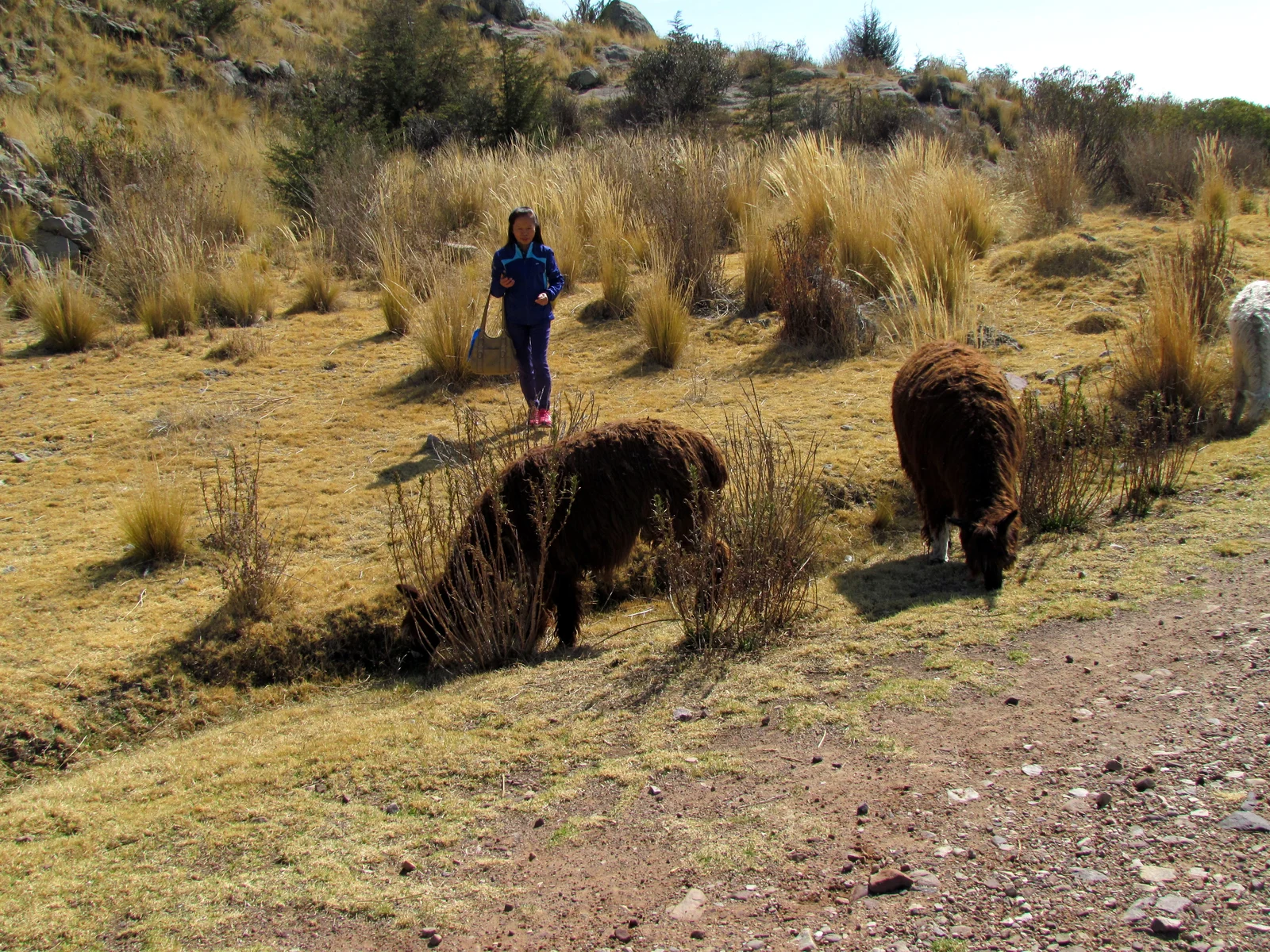
Alpaca, from the high Andes.
Across highland herds, sorting rooms and textile mills, the fibre carries a living knowledge of animals, colour and touch.
.jpg)
01 /
A material rooted in the highlands.
In the high Andes of Peru, alpaca fibre begins within a pastoral way of life. Puno, Cusco and other highland regions are part of this landscape of animals, families and seasonal work.
The connection is more than a view of mountains. Herding and fibre production sit within everyday knowledge: caring for animals, recognising the fleece and deciding how to gather it. This is a living textile culture, not only a reference to the past.
02 /
The first differences are visible.
Look closely at a fleece and variation appears immediately. Huacaya presents crimped staples; Suri falls in lustrous locks. Natural shades add another layer of difference before any colour is introduced in processing.
Crimp, lustre and colour give the fibre its first visible character. These are differences a sorter recognises and a spinner works with.
03 /
Gathering the fleece.
Shearing turns a year’s growth into a material that can be handled and assessed. The way it is collected affects what comes next: the condition of the fleece, the separation of its parts and the ease with which it can be sorted.
The pace of this work belongs to local conditions and the care of the herd. From here, the focus moves from the animal to the fibres laid out for selection.
Sources: P01
04 /
The knowledge in the hands.
Experienced fibre sorters are central to Peru’s alpaca industry. Working through fleeces by hand, they separate material into usable qualities. Fineness is part of that judgement, alongside the visible and tactile character of the fibre.
The important moment is often a small one: a staple opened, a portion set aside, a different quality kept separate. A whole fleece begins to become something more specific.
The skill turns variation within a fleece into choices that a processor can work with.
Sources: P01
05 /
Traditional knowledge, contemporary tools.
Alongside the sorting room are laboratories, fibre research and technical standards. Fibre diameter and its distribution can be assessed with electronic instruments, while sampling and handling practices support consistency.
These tools add information to the judgement of growers and sorters. They do not make the human story less important; they help carry that knowledge into a more precise material description.
Sources: P02
06 /
Towards Arequipa, and the prepared fibre.
Arequipa is one of the places where the highland fibre story meets industrial textile expertise. Alpaca businesses there work through preparation and spinning, connecting the raw fleece with tops and yarns.
In a combed preparation, fibres are cleaned, opened and aligned into a more orderly form. Spinning turns a selected fibre direction into a yarn whose structure can be developed further. What reaches the next worktable has already passed through many decisions.
07 /
Keeping the story connected.
Origin is most useful when the place, the material description and the lot information can be read together. It gives a brand more than an evocative landscape: it gives context for the fibre it is considering.
For LuMiao, that is the point of looking upstream. Understanding where the material begins and how it is prepared helps us discuss what to develop next.
Sources & reading
- P01PROMPERÚ / Alpaca del Perú — Alpaca fiber: Uncover the value chain from softness to well-being
- P04International Alpaca Association — La Alpaca
- N04Surico — Suri Alpaca
- P02INACAL — Tecnología y calidad: clasificación digital de la fibra de alpaca
- P05Michell — Traceability
- P07International Alpaca Association — About Us
- P08Michell — Production Process