ALPACA / NEW ZEALAND
An Andean fibre. A New Zealand chapter.
From the paddock to the sorting table, the story follows the people learning from each fleece—and carrying that knowledge into the next.
01 /
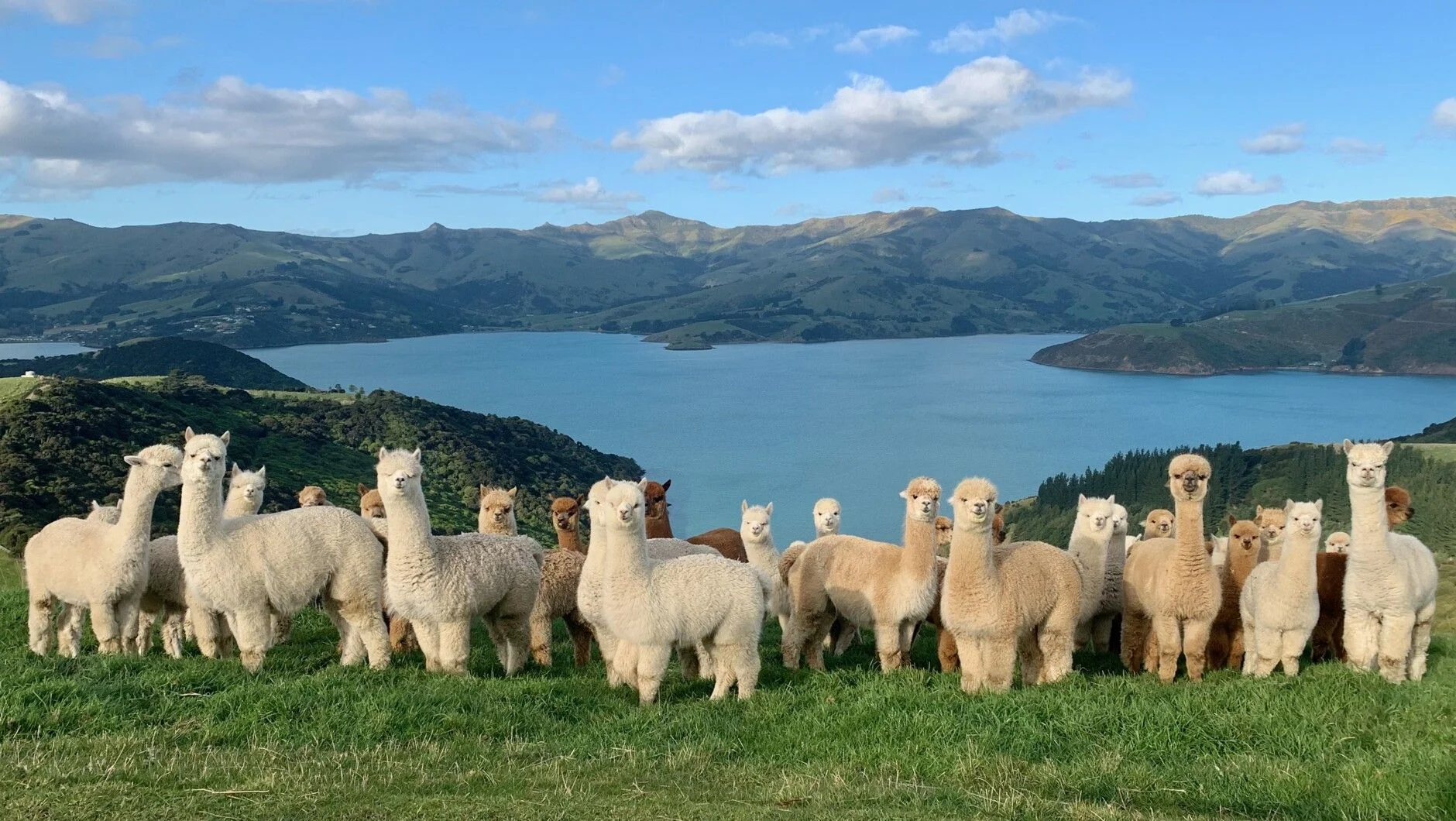
A new setting for an Andean animal.
Alpacas are at home in New Zealand’s farming landscape today, but their story begins in South America. Here, that history continues in another setting: paddocks, small herds and specialist breeders working with the same remarkable fleece.
The landscape gives this chapter its atmosphere. The closer story is about observation: how a fleece develops, what can be learned from it, and which characteristics a breeder chooses to carry forward.
02 /
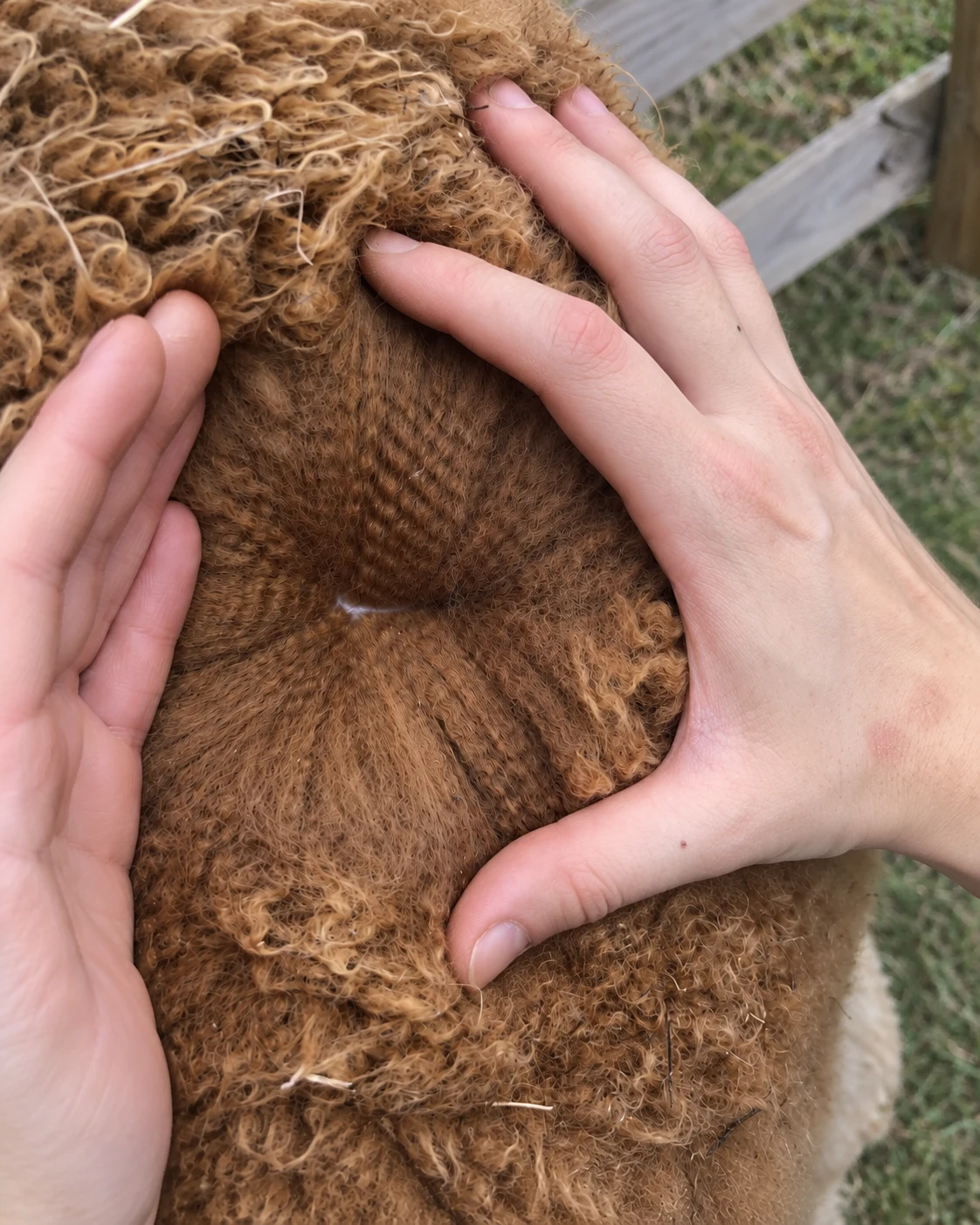
Learning from an individual fleece.
The fleece is considered for more than its first impression. Fineness, length, uniformity and the presence of coarser fibres all enter the conversation. Over time, records help breeders see how an animal’s fibre changes.
New Zealand’s testing services can connect samples to individual animal identifiers and compare results across years. A number becomes more useful when it belongs to a sample, an animal and a history of observation.
03 /
A year’s growth, carefully gathered.
Annual shearing is an important part of alpaca care. On shearing day, material handling matters too: a clean work area and separation between fleece portions help preserve the qualities that have taken time to grow.
The main body fleece is handled separately from stronger fibre on areas such as the legs and belly. Different colours are also kept apart. These small practical choices shape what the processor receives.
Sources: N05
04 /
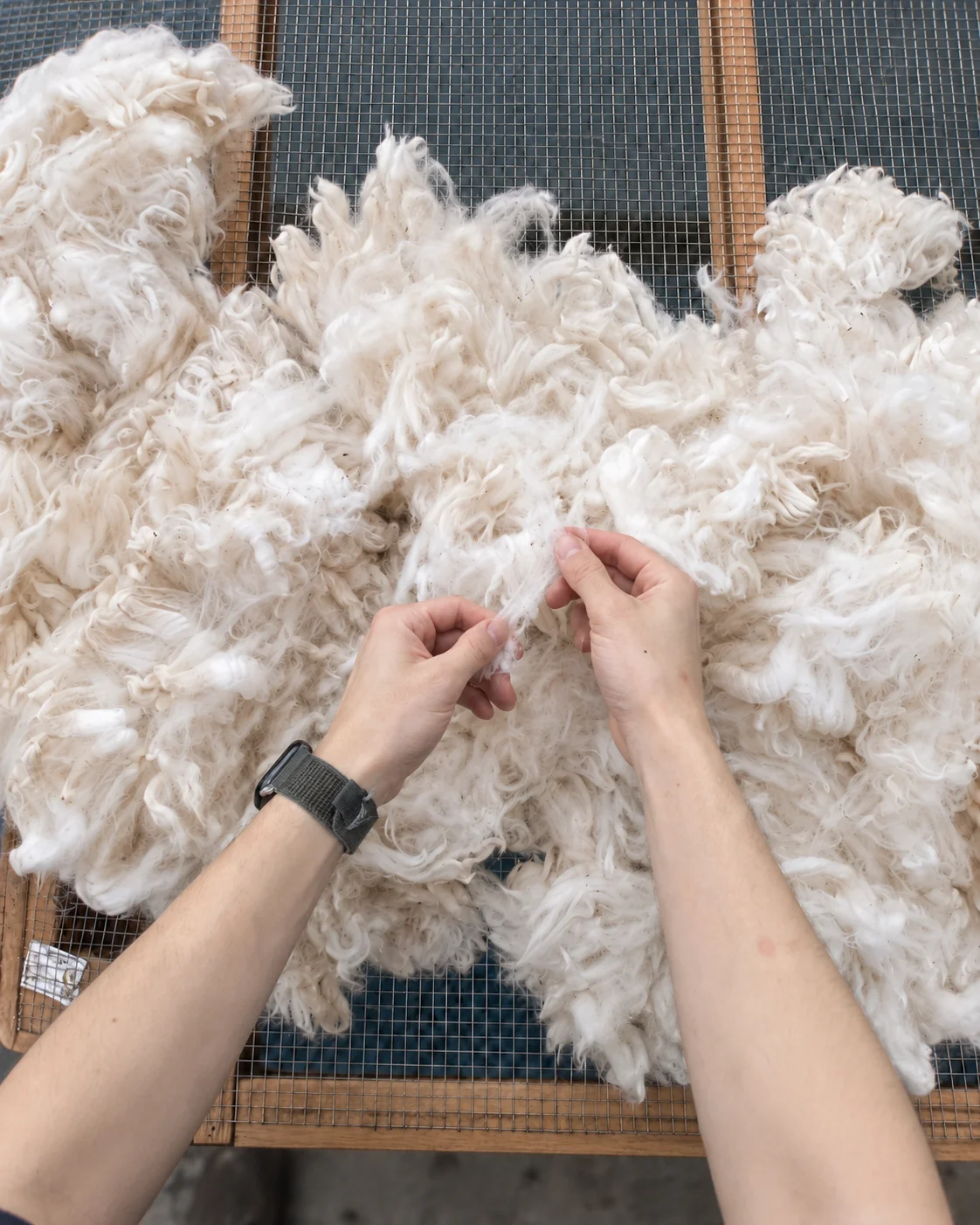
The sorting table brings the material closer.
With the fleece laid out, the view changes. Instead of seeing a whole animal, the sorter can look at the fibre’s length, consistency and condition. Skirting removes unsuitable or inconsistent parts before the material is bagged.
It is a tactile stage: opening a staple, following its length and feeling how the fibres sit together. This is where the landscape story becomes a material story.
Sources: N01
05 /
A measurement beside a handful of fibre.
Fibre testing gives the visual and tactile assessment another dimension. The average diameter describes the centre of the measured sample; the spread of diameters shows how varied that sample is.
For a material discussion, both are useful. A fine average and a consistent distribution answer different questions. Neither replaces the need to see and handle the prepared fibre.
06 /
From separate fleeces to a useful lot.
A single fleece is not yet a consistent production lot. Collection and grading bring suitable fibres together. New Zealand fibre pools provide one route, grouping material by characteristics such as colour, micron and length before it moves to market.
This is an important change of scale. Individual animals retain their place at the beginning of the story, while the material becomes practical to prepare and work with.
Sources: N03
07 /
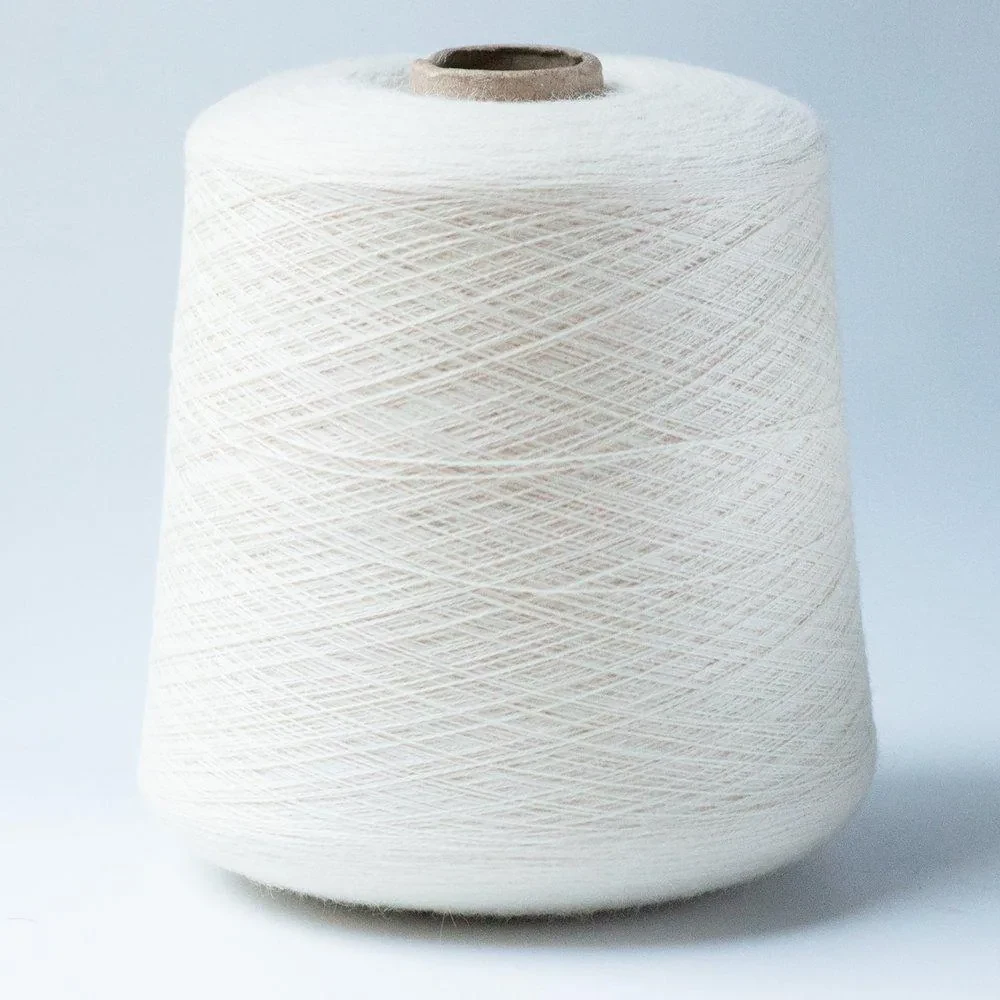
The next conversation is about the material.
Prepared fibre and yarn allow the discussion to move towards handle, surface and weight. The detail gathered upstream helps give those choices a clearer foundation.
At LuMiao, we bring the conversation back to what the brand wants to achieve, and which material direction is worth developing further.