A wool–hemp–silk blend explored through tops, trousers and coordinated looks.
A separate piece — trousers; white top is styling
Materials & reference notes
A wool, hemp and mulberry-silk blend appears in a set of pieces with different jobs to do. A yellow-green polo works on its own and as part of a coordinated look. A navy crew neck changes the proportion of the full outfit. Separate beige trousers bring the story back to individual pieces, with room to develop the wardrobe further.
Recorded composition: 50% wool / 30% hemp / 20% mulberry silk. Matching ratios do not establish one yarn or dye lot. The polo shown alone and with trousers is not counted twice. The white styling top has no inherited composition.
Mulberry silk explored through cable-knit layers and a raised, haloed surface.
Materials & reference notes
Silk can have more than one kind of surface. Pale-blue cables give a cardigan and pullover a clearly defined relief, although their openings and roles are different. A grey-blue, haloed pullover changes that reading again: the fibre direction is familiar, but the outline becomes softer and less defined.
The three historical references record 100% mulberry silk. They do not establish one yarn lot, a shared finishing process or the feel of the fabric.
Warm ivory, a fine halo and cashmere–silk references.
Materials & reference notes
Warm ivory and a fine, soft-looking surface connect three different garment roles. A curved button front gives one cardigan an asymmetric hem. A sleeveless top reduces coverage to a first layer, while a short-sleeve top and long skirt extend the palette into a complete look. Cashmere and mulberry silk run through the references in different recorded proportions.
The sleeveless reference records 58% cashmere / 42% mulberry silk; the cardigan and set record 58% mulberry silk / 42% cashmere. Styling trousers and belt retain separate identities.
Edges define necklines, openings and sleeveless layers.
Materials & reference notes
In these cashmere references, edges do different jobs. Some define a sleeveless neckline, others frame an open cardigan or carry a pocket. The body can remain textured or become much looser, while a separate cardigan-and-vest pairing shows how those choices work in layers.
Cashmere directions follow historical records. The additional long-sleeve piece with the ivory vest needs separate identity confirmation. The cardigan and vest in the final reference are two visible components.
These worsted-wool references share a relatively clean knitted surface but serve different roles. A close-fitting layer gives the starting proportion. A low standing collar and small front fastenings bring attention to the centre line. A zipped top and matching trousers extend the discussion from one garment to a complete look.
Historical worsted-wool references do not establish a shared yarn batch. The small front fastenings do not verify a particular knot-button technique.
Fine-Gauge Wool Base-Layer Top: 100% wool reference; worsted spinning system
Chinese-Inspired Wool Cardigan: 100% wool reference; worsted spinning system
Worsted Wool Active Knit Set: 100% wool reference; worsted spinning system
With colour held in black, the eye moves to shape and relief. A plain, fuller-sleeved top establishes the base. Decoration appears first in one concentrated area, then spreads across a cardigan. A layered look changes the depth again, showing how one dark surface can sit against another.
Decoration is described by visible placement and density. The images do not establish one embroidery method. Draped and sleeve-worn outer layers are different wearing states.
Brown to almost black provides a quiet background for four different knitted surfaces. One pullover has a soft-looking halo, another a more granular effect. An opening cardigan changes the garment role, and a darker cashmere–alpaca–silk blend gives the comparison another fibre direction. These are distinct references, not one yarn or colour run.
Each reference has a separate recorded material direction. The cashmere–alpaca–silk cardigan is a historical reference, separate from the current 30/70 alpaca project.
Extended fronts shaped by a belt, a back tie or a single fastening.
Materials & reference notes
An open front can be held in more than one way. One longline piece gathers at the waist. Another keeps the front edge long and fringed while the fastening is placed at the back. A wide-ribbed cardigan uses a single button to connect a broader front. The question across the references is where the garment closes, and what that does to the fall of the knitted fabric.
The longline alpaca reference is historical. The fringed piece ties at the back; the wide-ribbed cardigan closes with a single button. These are different constructions.
A border acts as a graphic frame around a short opening layer.
Materials & reference notes
Three short opening layers use their edges to organise very different surfaces. Fringed borders surround a checked body. A pale band separates the opening from black-and-white stripes. Darker borders give an open paper-yarn direction a visible frame. The similarity lies in the graphic role of the edges, not in one fibre or construction method.
Cashmere, linen and paper-yarn directions remain separate. Exact paper-yarn fibre labelling and joining details require project specifications.
Short outer layers divide the body between different materials.
Materials & reference notes
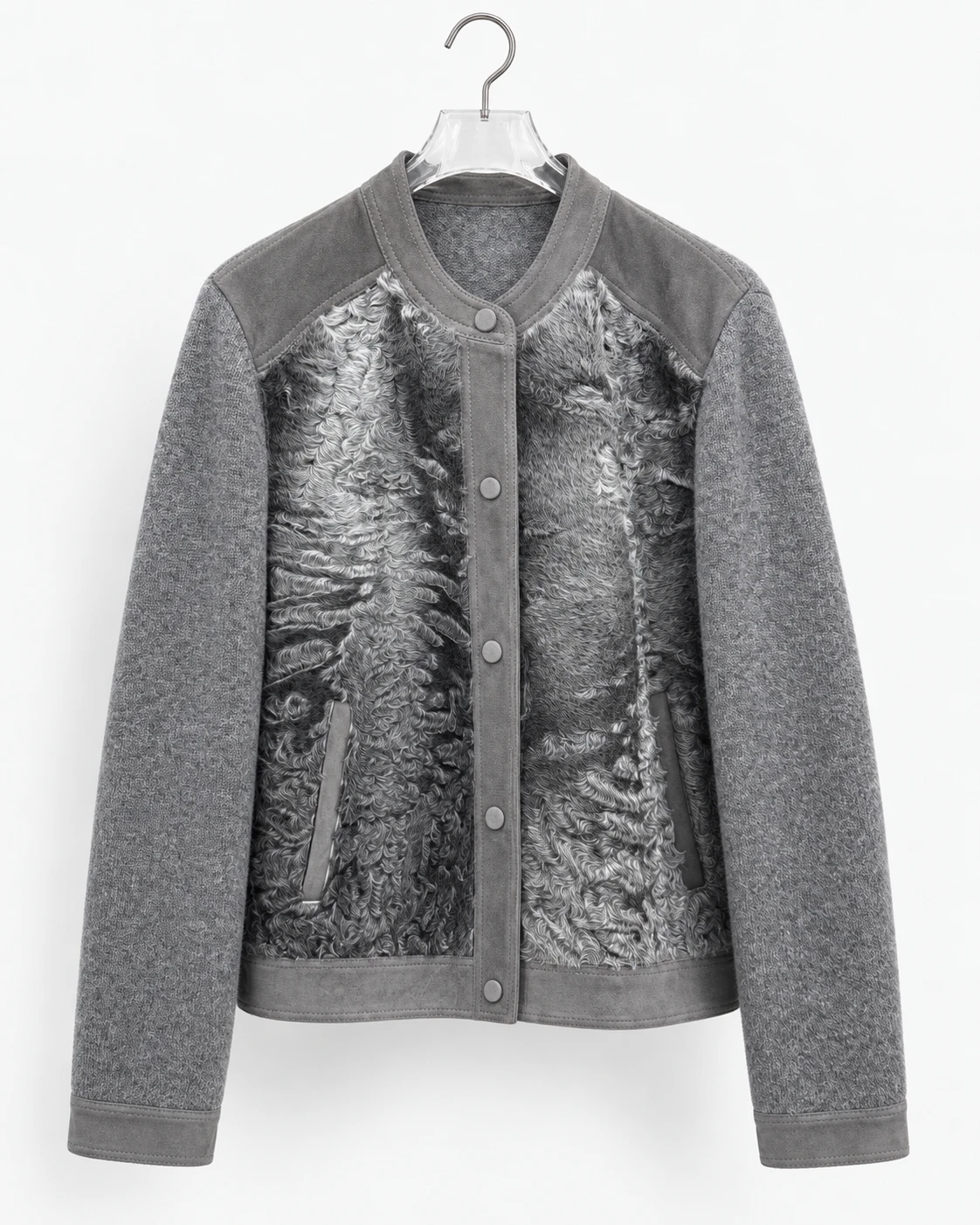
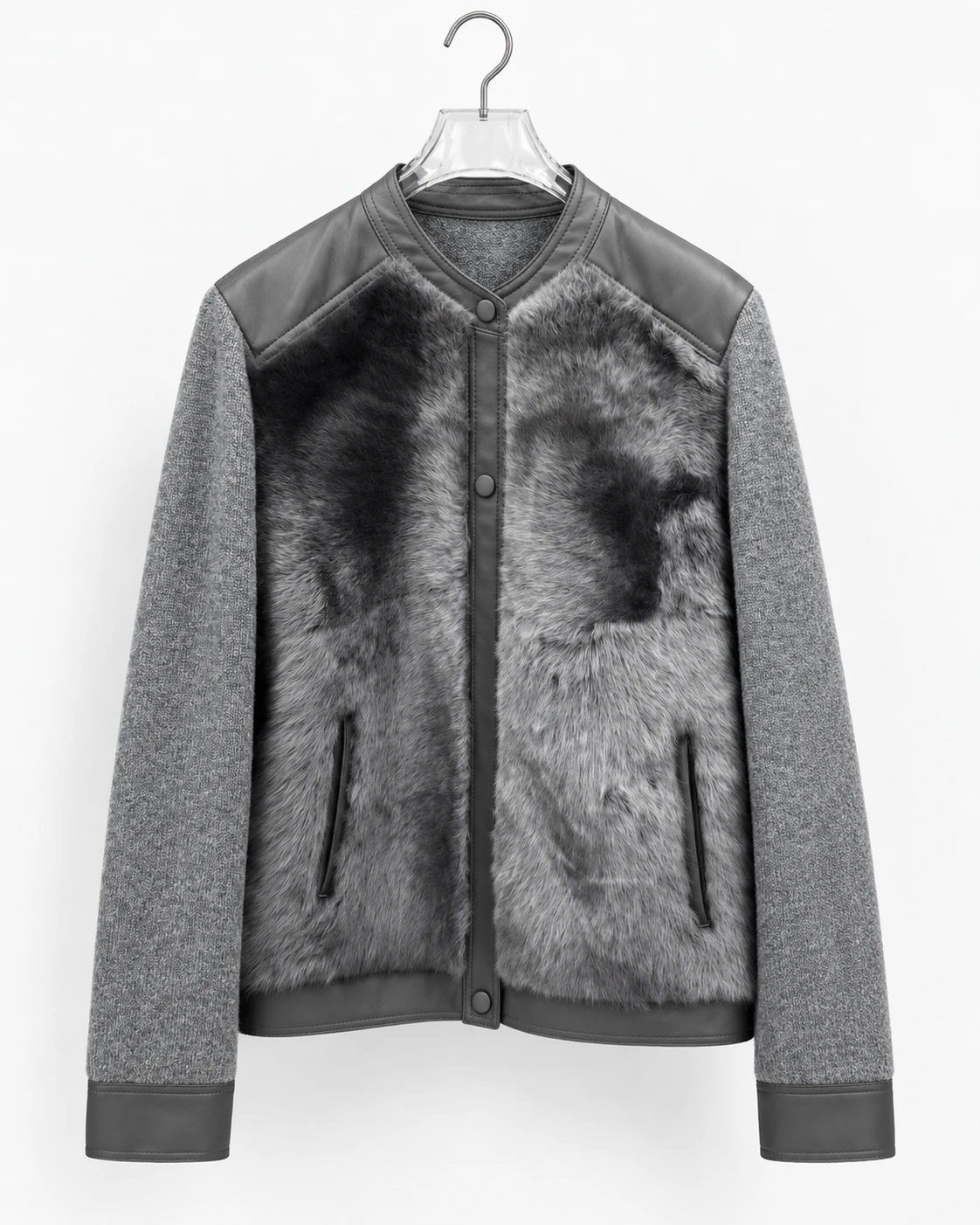
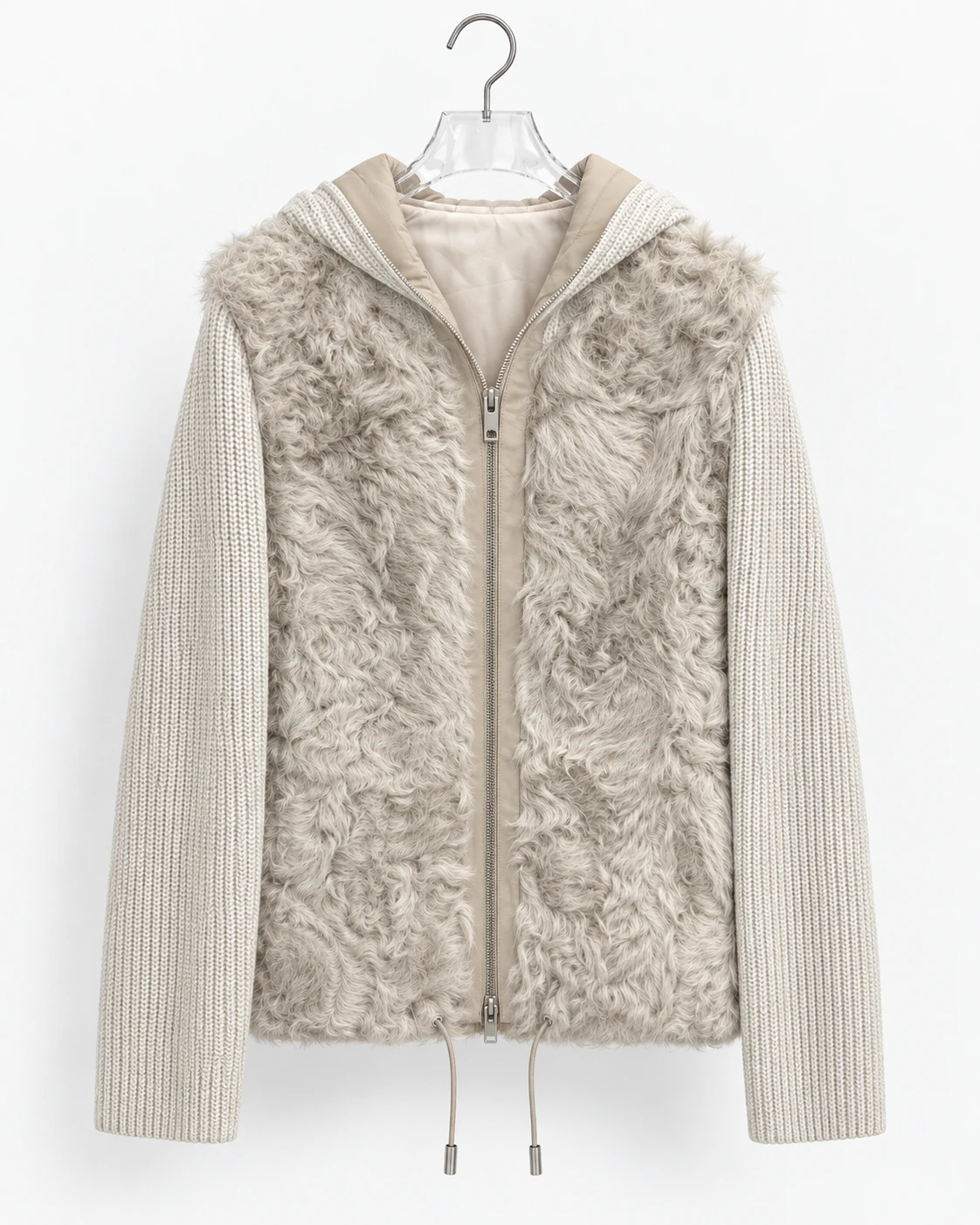
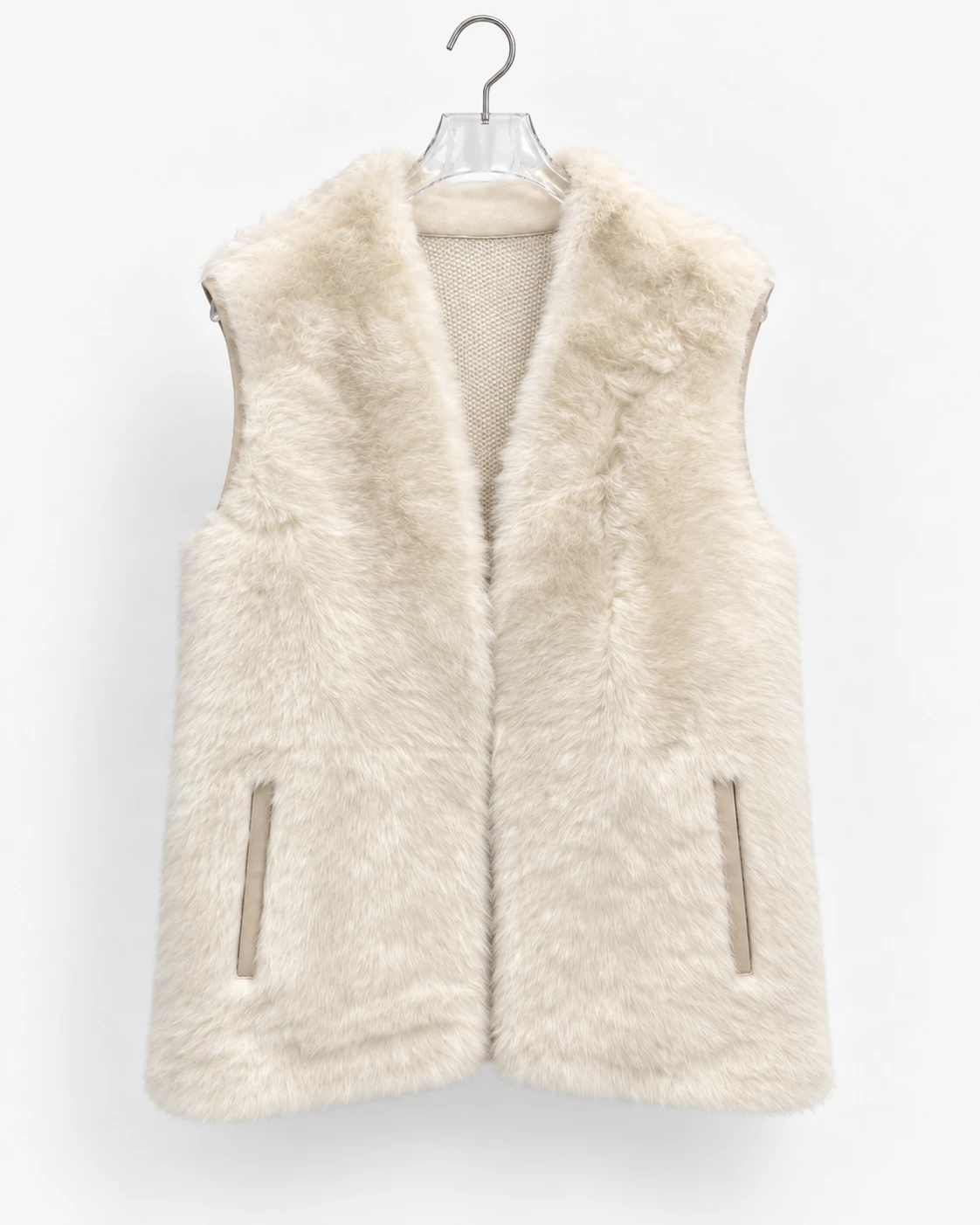
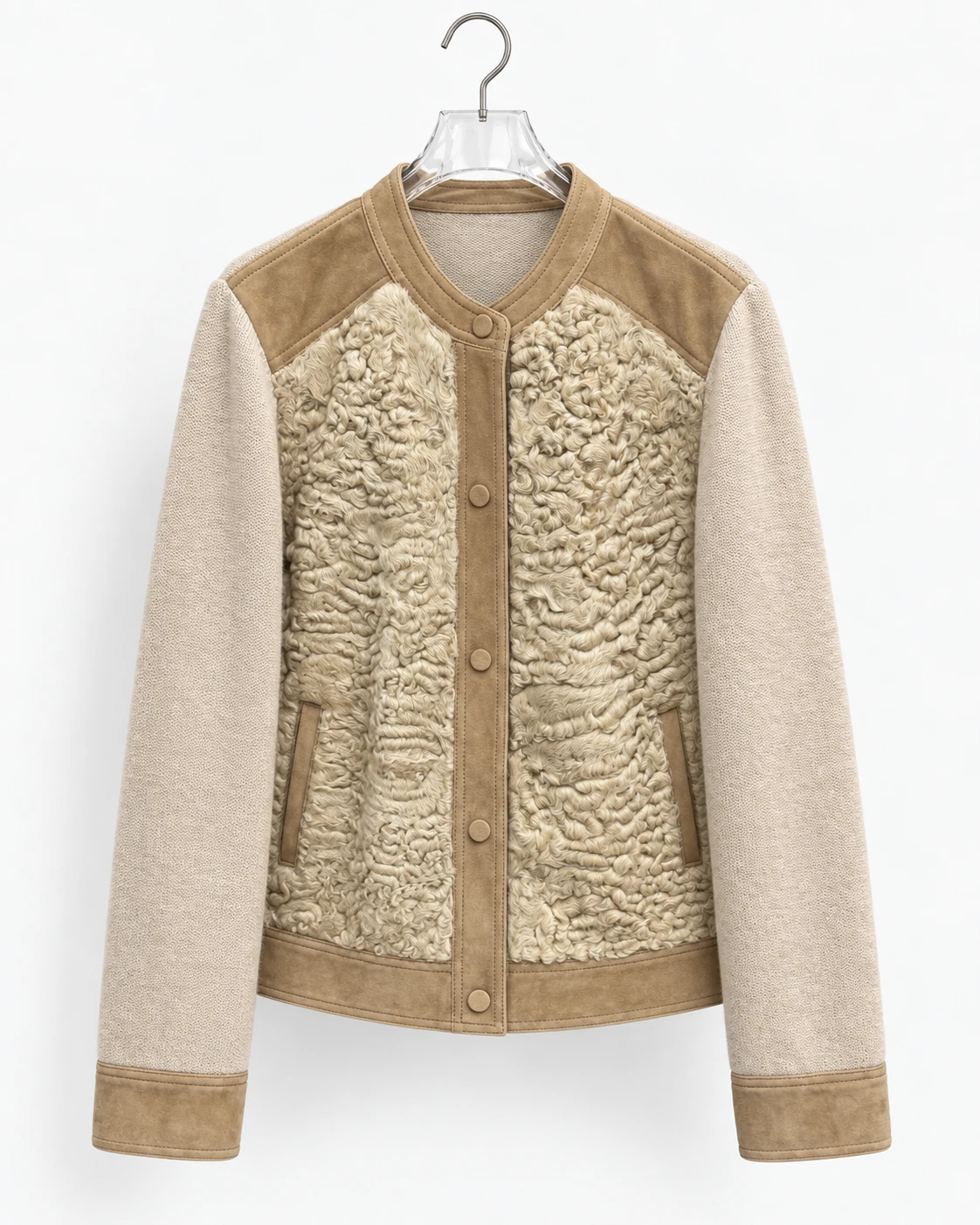
These mixed-material outer-layer references divide a jacket into different surfaces and jobs. Curly shearling or another hair surface shapes much of the body, leather defines certain edges, and knitted sections change how the sleeves or coverage work. The MF597 references offer one framework with different surface entries; the hooded and sleeveless pieces extend the comparison to coverage.
Material entries describe separate shell areas, not whole-garment percentages. Two MF597 colour records and a different hair-surface entry retain their identities. The unidentified reference is excluded; joining, lining and movement need sample review.
The colourwork stays high across the shoulders and upper chest. A button-front cardigan keeps the centre relatively open; a zip and higher neckline give the second piece a straighter middle line. The two references compare how one upper-body graphic idea reads through different openings.
Two design references, with different openings and colourwork arrangements; not evidence of one development season.
Knitted hood, full front zip and relaxed short body.
Materials & reference notes
Both references start with a knitted hood, a full front zip and a relaxed short body. One keeps a deeper colour and a quieter surface. The other brings a lighter colour and more visible texture. The construction stays recognisable while the surface changes the role of the piece.
Hood-up and hood-down views belong to the same garment. Gauge, weight and hood measurements need sample confirmation.
Hooded Cashmere Cardigan: 100% cashmere reference
Hooded Zip Cashmere Cardigan: 100% cashmere reference
Low-contrast melange and a half-zip high neckline.
Materials & reference notes
Two half-zip pullovers share a restrained, low-contrast surface and an opening at the neck. The collar reads differently when opened, but the garments also differ in proportion and recorded fibre direction. That makes them a useful comparison of a common neckline idea rather than two identical styles with a single change.
The cashmere and cashmere–silk references differ in material and garment proportion as well as collar opening.
Marl-Effect Cashmere Zip Pullover: 100% cashmere reference
A dark top and skirt create a continuous visual line.
Materials & reference notes
Two dark knit sets make the top and skirt read as one long surface. A wider top keeps the line nearly uninterrupted. A polo opening and a more defined waist change the balance of the second look. The comparison is about how proportion can reshape the same continuous visual idea.
The historical 30% cashmere entries are partial composition records. They do not establish one full recipe or yarn.
Motifs change a garment through placement as much as through their shape. One reference distributes outlined forms across the body and sleeves. The other positions circular elements against a more open surface. The useful comparison is how much of the garment each motif occupies and what remains unmarked.
Motif placement is visible; printing, embroidery or jacquard methods have not been verified.
Small reflected points can sit very differently on a textured surface. A sleeveless grey-brown reference has a granular-looking base; a reddish-brown cardigan places the effect in a more haloed one. Their fibre directions and constructions remain separate. The comparison begins with the distribution of light, not an assumed shared sequin method.
The reflective material, light response in motion and wash performance have not been verified.
Sequined Sweater Vest: Composition selected per project
Mohair-Blend Sequined Cardigan: Mohair direction; blend and percentages selected per project
Keep the garment type simple: pale, short-sleeved and round-necked. Then compare what the surface does. A cashmere reference and a cotton–cashmere–silk direction are more covered, while a linen-direction piece opens the body through the stitches. The silhouettes provide the common ground; the yarns do not.
Cashmere, cotton–cashmere–silk and linen directions remain separate. Similar shapes do not imply the same yarn, feel or washing behaviour.
One short outer-layer reference divided by horizontal channels.
Materials & reference notes
One short outer-layer reference uses horizontal channels to divide its volume. A fuller sleeve and shorter body are visible in the complete garment; closer views show where the channels change the surface. The image is a starting point for construction discussion, not evidence of a particular fill or thermal performance.
One garment, several views. The historical cashmere direction does not verify whole-garment composition, filling, lining or thermal performance.
Cashmere-Faced Padded Knit Jacket: Cashmere outer direction; lining and fill composition selected per project