Measurements, color references, materials, and written construction details.
UNDERSTAND BEFORE SPECIFYING
Read the product behind the starting input.
A tech pack, sketch, physical sample, garment reference or image-led brief can begin development. We first use it to understand the intended product result, then separate what is known from what still needs material, technical or buyer judgment.
Current reading
Tech pack
Read measurements, construction notes, materials, colors, trims, and revision history. Conflicts stay visible until one version is approved.
Attached diagrams, reference photographs, and placement drawings.
How conflicting files should be interpreted and which version is current.
Missing approvals, material availability, sample objective, and production release state.
ONE PRODUCT, SIX CONNECTED DECISIONS
Turn the intended result into decisions that can be developed and produced.
The buyer does not need every technical answer on day one. The project does need a responsible owner and a validation path for every open question.
Product intent
Market, season, use, silhouette, must-keep features, permitted changes, and the decision required next.
Material direction
Composition limits, yarn construction, weight, hand feel, color route, availability, and physical confirmation needs.
Knit and garment construction
Gauge direction, stitch structure, density, panel relationships, openings, closures, trims, and workmanship.
Fit and size system
Base size, measuring method, fit intent, recovery, grading rules, and the sizes that need physical review.
Finish and performance
Wash, pressing, brushing, dimensional response, recovery, wearability, care, and project-specific tests.
Commercial and approval record
Quantity by color and size, timing, current version, sample identity, approved items, provisional items, and open exceptions.
NEXT USEFUL OUTPUT
Choose the smallest output that can answer the current uncertainty.
A full garment is not automatically the fastest or most informative next step.
Current uncertaintyCan the current brief support a useful commercial comparison?
Useful outputA quote range with assumptions, material shortlist, color route, or availability response.
Remains openPhysical product evidence, final approval, production timing, and any unverified material or construction decision.
ASSIGN, REVIEW, RECORD
One sample should not approve the complete product by accident.
Every sample or test needs a written job and an explicit result.
Approved
The named decision is accepted for the identified version.
Provisional
Useful for the next step, but final evidence is still missing.
Revise
A specific change and another review are required.
Physical review required
The current remote or documentary evidence cannot support the decision.
Recorded revision decision
A 5 cm sleeve change still needed a garment-level review.
The sleeve measured 57.5 cm. The requested change was a 5 cm reduction while other measurements stayed fixed. The decision was to remake the PP sample and review the new proportion before grading.
Boundary: the record does not confirm that the revised PP sample or grading was later approved.
Production handover
One approved version must travel together.
- Style ID, version, and date
- Approved sample and measurements
- Yarn, color, construction, and finish
- Trims, labels, sizes, and quantities
- Approved changes and open exceptions
A chat message or isolated revised file does not update the production version by itself.
EVIDENCE BOUNDARY
Use the evidence to make a decision without inventing the ending.
Recorded case decision
Supports the situation, trade-off, selected action, and known current state.
Does not prove final approval, delivery, repeat business, or customer success unless recorded.
Visible garment reference
Supports observable product type, surface, structure, openings, and silhouette.
Does not prove exact fiber, yarn supplier, internal construction, availability, or project result.
Remote images and measurements
Support selected visible and measurable questions for an identified sample version.
Do not prove true color, hand feel, weight, recovery, drape, or on-body fit.
Production order or prepared yarn
Supports that preparation has begun.
Does not prove completed production, inspection, shipment, or buyer acceptance.
REFERENCE-BASED DEVELOPMENT GUIDES
See how visible garment features become development decisions.
These guides use visible LuMiao garment references. They do not document customer project results.
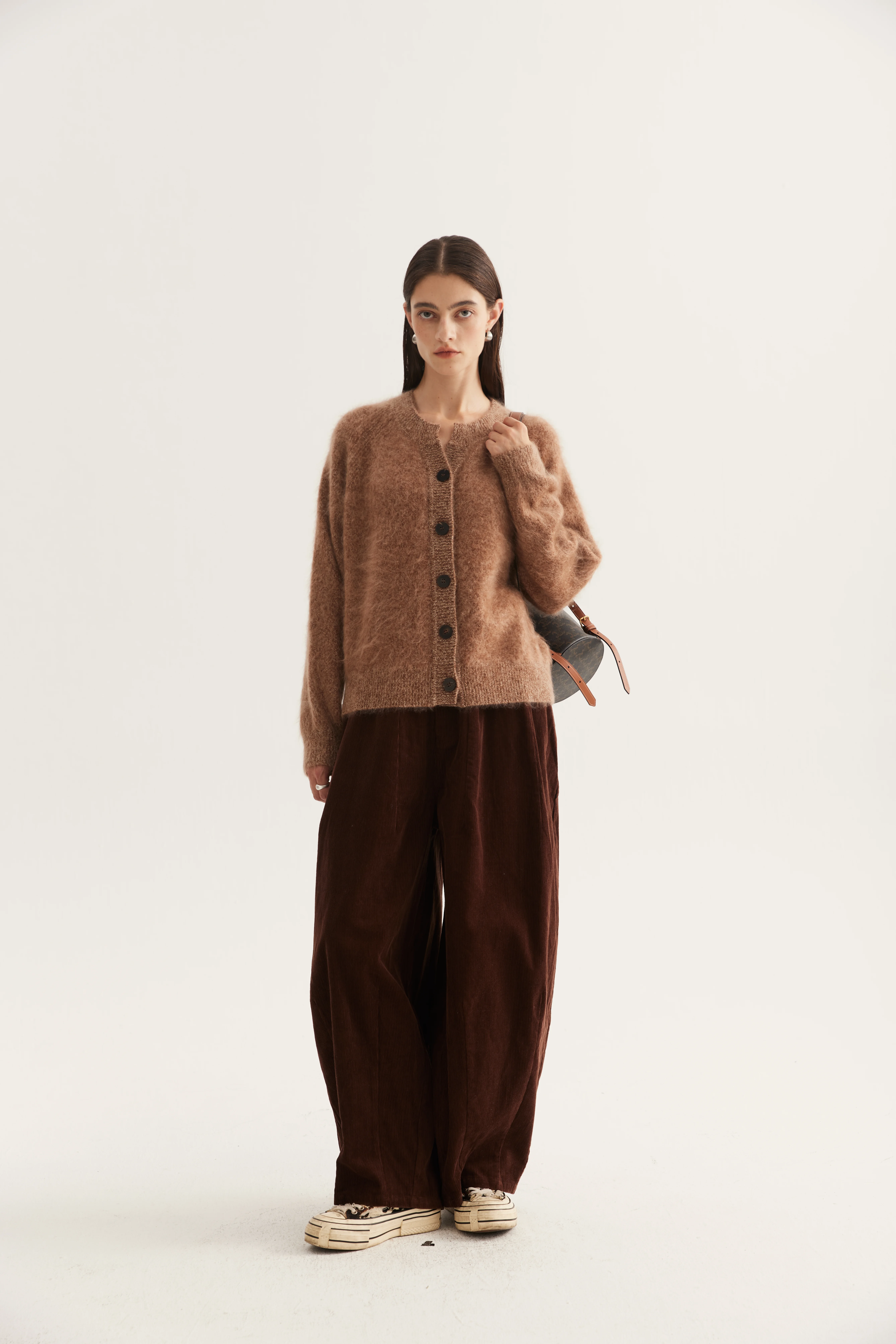
Surface and finish
Brushed Cashmere Cardigan
Approve brushing with weight, dimensions, and edge clarity.
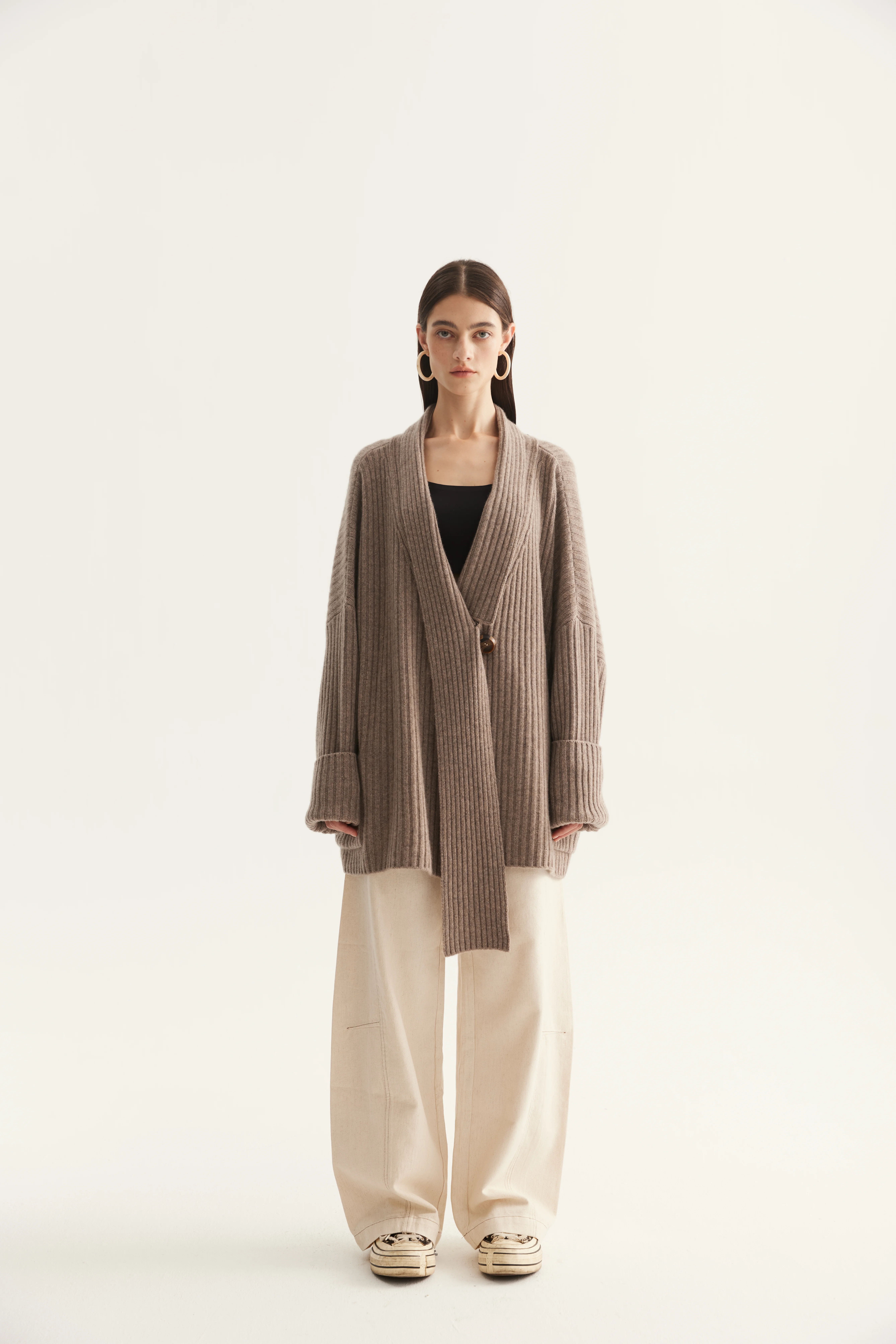
Structure and scale
Wide Ribbed Cashmere Cardigan
Review rib relief with recovery, volume, drape, and dimensions.
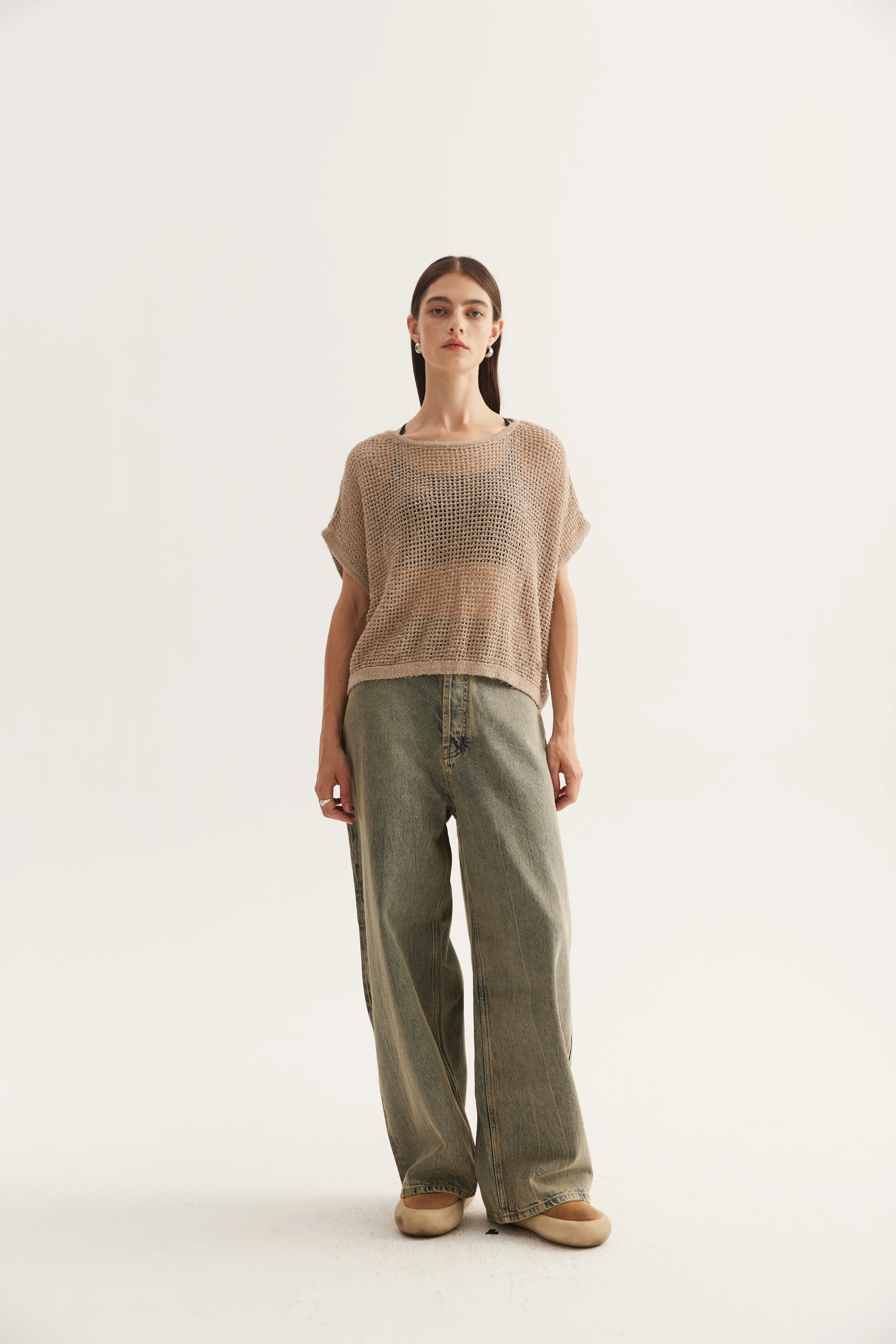
Coverage and stability
Openwork Knit Top
Review coverage, openings, edges, and post-care dimensions.
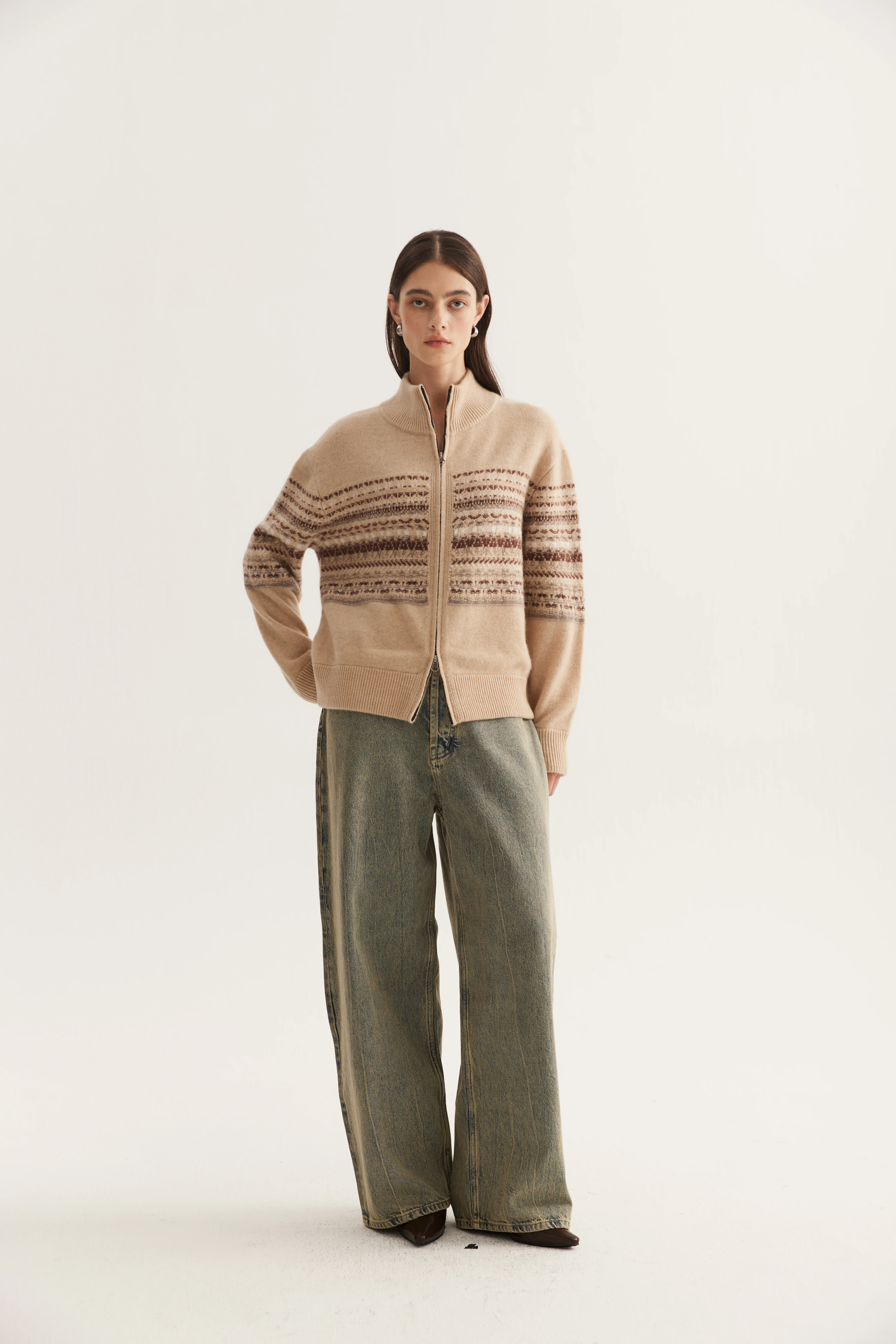
Motif and closure
Colorwork Zip Cardigan
Map motif scale, solid zones, edges, and zipper alignment together.
COMMON QUESTIONS
Product-development approval stays specific to the evidence.
Can LuMiao start from an incomplete tech pack?
Yes. A partial tech pack, sketch, physical sample, garment reference, or image set can begin development. Missing material, construction, measurement, finish, and approval decisions remain explicit until resolved.
Does the first knitwear sample approve the complete product?
Not automatically. Each sample should have a written approval job. A swatch, washed test, development garment, fit review, size review, and production reference answer different questions.
What information should move from an approved sample into production?
The production handover should keep the approved sample reference, measurements, material and color references, construction, finish, trims, labels, size range, quantities, version, approved changes, and open exceptions together.
Can photographs replace physical sample review?
Photographs and measurements can support selected visible and measurable decisions. True color, hand feel, weight, recovery, drape, and on-body fit may still require the physical sample or another suitable physical review.
Contact us with the starting point and the next decision.
Send the strongest reference, target product and season, what must stay, what may change, material direction, quantity by color and size, timing, and the decision the first review or sample needs to resolve.