Direct answer
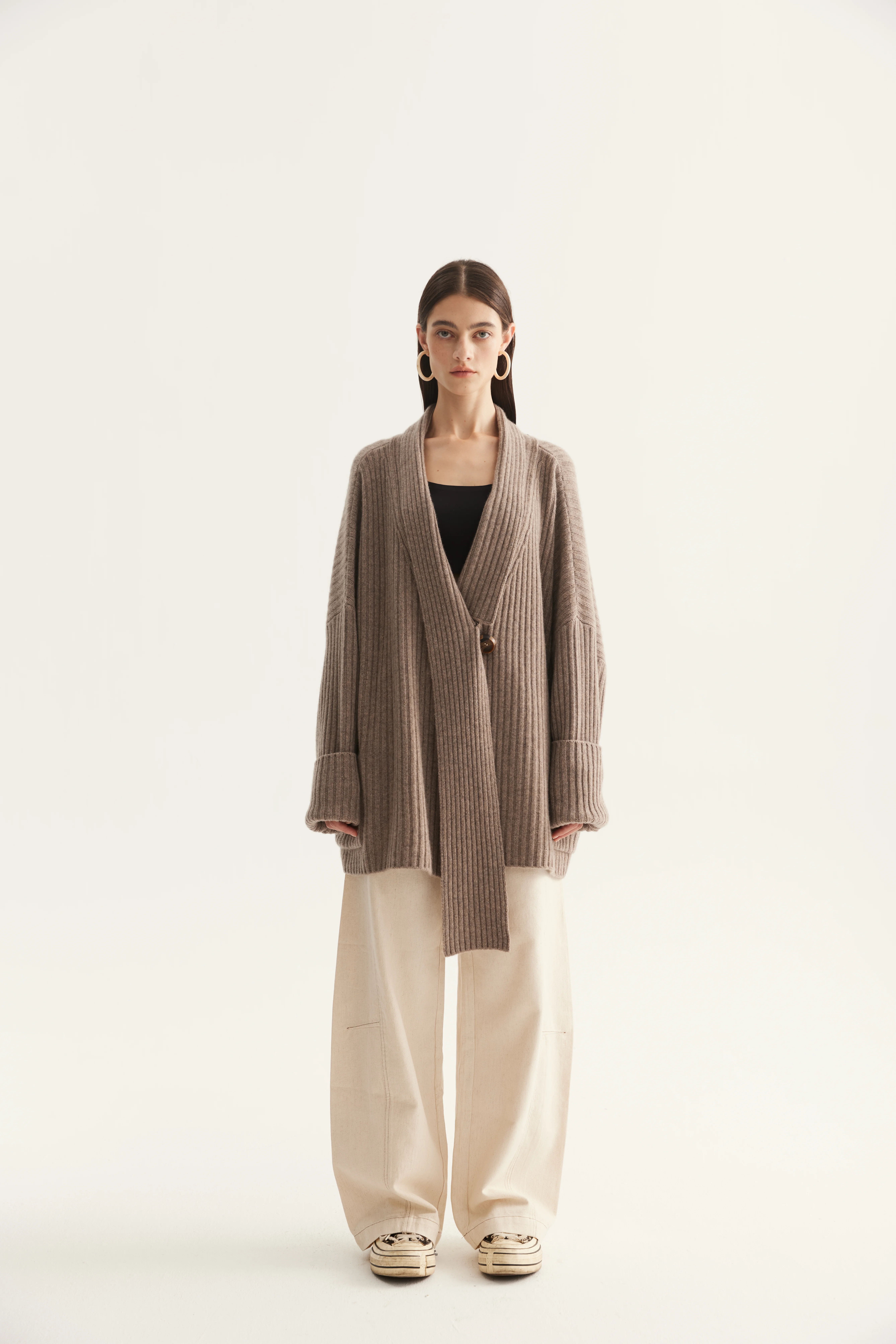
A wide ribbed cashmere cardigan is specified through rib geometry, yarn, density, relaxation and finishing together with garment width, sleeve volume, front construction and finished dimensions. Swatches resolve surface and extension direction, and the complete garment confirms drape, balance and dimensional behavior.
Develop rib relief and recovery together
Rib geometry creates surface relief and extensibility in combination with yarn, stitch length, density, relaxation and finishing. The project sets the recovery and dimensional-stability targets for the intended construction and use.
Scale changes the development problem
A rib used in a cuff or compact body controls a smaller area than the same direction carried across a wide cardigan. Body width, length, sleeve volume and an extended front introduce more fabric mass and leverage, so hang, balance and opening behavior must be evaluated on the full silhouette.
Use swatches for structure decisions
A swatch compares rib scale, depth, surface definition, extension direction and the response of a selected yarn-density combination. The complete garment then resolves front overlap, sleeve hang, balance and the way the piece settles after finishing and conditioning.
Measure under defined conditions
Relaxed and finished measurement points should be agreed before approval. When elasticity or dimensional change is a requirement, the selected ISO method, specimen type, conditioning, washing and drying route must be named so that the result has a reproducible meaning.
Approve the silhouette and structure together
The production reference should capture the accepted rib appearance, body and sleeve proportions, wrap or front behavior, edge condition and finished measurements. Permanent recovery, shrinkage, weight, gauge and tolerance values are confirmed only for the actual project.
BUYER QUESTIONS
How is dimensional stability set for a rib structure?
LuMiao defines stability for the selected construction and use by aligning rib geometry, yarn, density, stitch length, relaxation, finishing, garment shape and care conditions.
Why can a wide ribbed cardigan hang differently after relaxation?
Relaxation allows knitted loops and the yarn system to redistribute. Across a wide body, generous sleeves and an extended front, that change can affect length, width, overlap and balance more visibly than it would in a compact trim or small swatch.
How do swatch and garment approvals divide the work?
The swatch compares rib scale, relief, surface, extension direction and yarn-density options. The full garment approves body and sleeve volume, front behavior, drape, balance, finished measurements and the result after the agreed finishing route.
When is ISO 20932-1 relevant to a finished knitwear requirement?
ISO 20932-1 supports a defined strip-test measure of fabric elasticity and related properties. Garment-level approval covers fit, balance and dimensions, while the test record documents the reported fabric result.