Direct answer
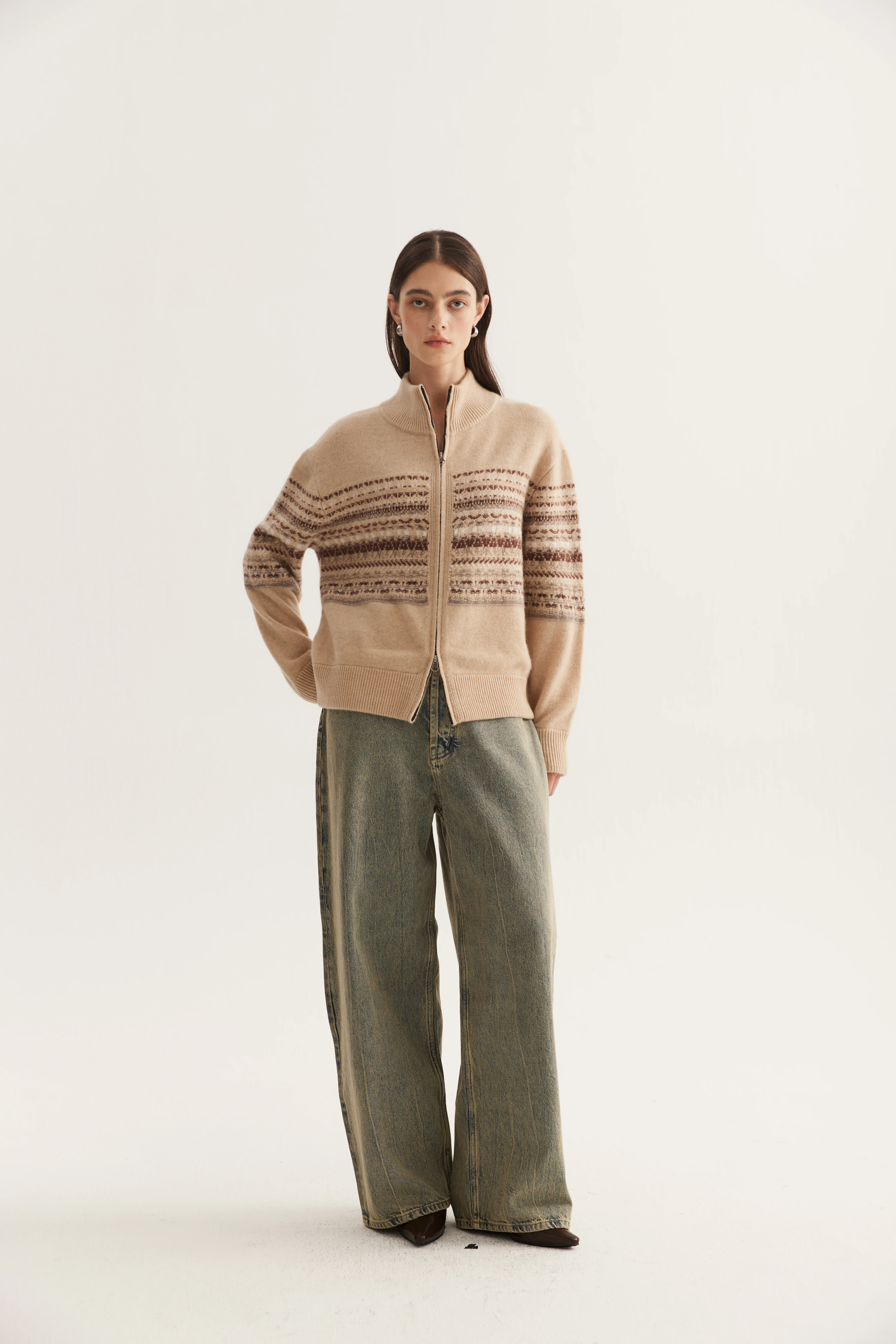
A colorwork zip cardigan is approved as a mapped pattern, center opening and finished-garment result. Motif scale, color placement and solid zones are reviewed together with the zipper, collar, cuffs, hem and dimensions. Reverse-side construction, yarn-feed tension and zipper reinforcement are defined in the development specification.
Map the motif before judging continuity
Motif scale, repeat, color palette and placement zones need to be defined against the actual garment dimensions. The upper body and sleeves may share a visual field while the collar, lower body, cuffs and hem use solid zones to control proportion and emphasis.
Treat the center zipper as part of the composition
A center opening divides the front pattern field and introduces zipper tape, teeth and a visible vertical line. The brief should state whether motifs align, mirror, continue approximately or intentionally break at that line, and how the result is judged when closed and open.
Connect the visible pattern to its construction
Front photographs establish motif placement and solid zones. Reverse-side review, the knitting program and production records define floats, yarn-feed tension, feeder route and reinforcement for the approved construction.
Move from pattern sample to zip garment
A swatch can compare color relationships, motif scale and the selected knitted route. The full garment is needed to review the center opening, collar, cuffs, hem, body and sleeve placement, zipper appearance, dimensions and the way the field reads across the complete silhouette.
Specify color and care checks
The buyer brief determines the relevant ISO 105 exposure, measurement points and washing or drying conditions. The resulting records document colorfastness and dimensional performance for the approved project.
BUYER QUESTIONS
How is the colorwork construction identified?
The front image establishes the repeated multicolor motif. Reverse-side review and production records identify the float route and knitting program used for the approved construction.
What changes when a repeated colorwork field crosses a center opening?
The zipper divides the motif field and adds a strong vertical element. Motif alignment, mirroring, interruption, zipper tape visibility and the closed-versus-open appearance must be mapped together with the garment proportions.
Which decisions are approved on a full zip-cardigan sample?
The full sample approves center-front alignment, zipper appearance, collar behavior, body and sleeve placement, solid-zone proportions, finished measurements and overall balance.
When should colorfastness or dimensional testing be specified?
Specify testing when the target market, care route, color combination or use creates a defined requirement, then select the relevant ISO 105 exposure or dimensional-change method and conditions.