Direct answer
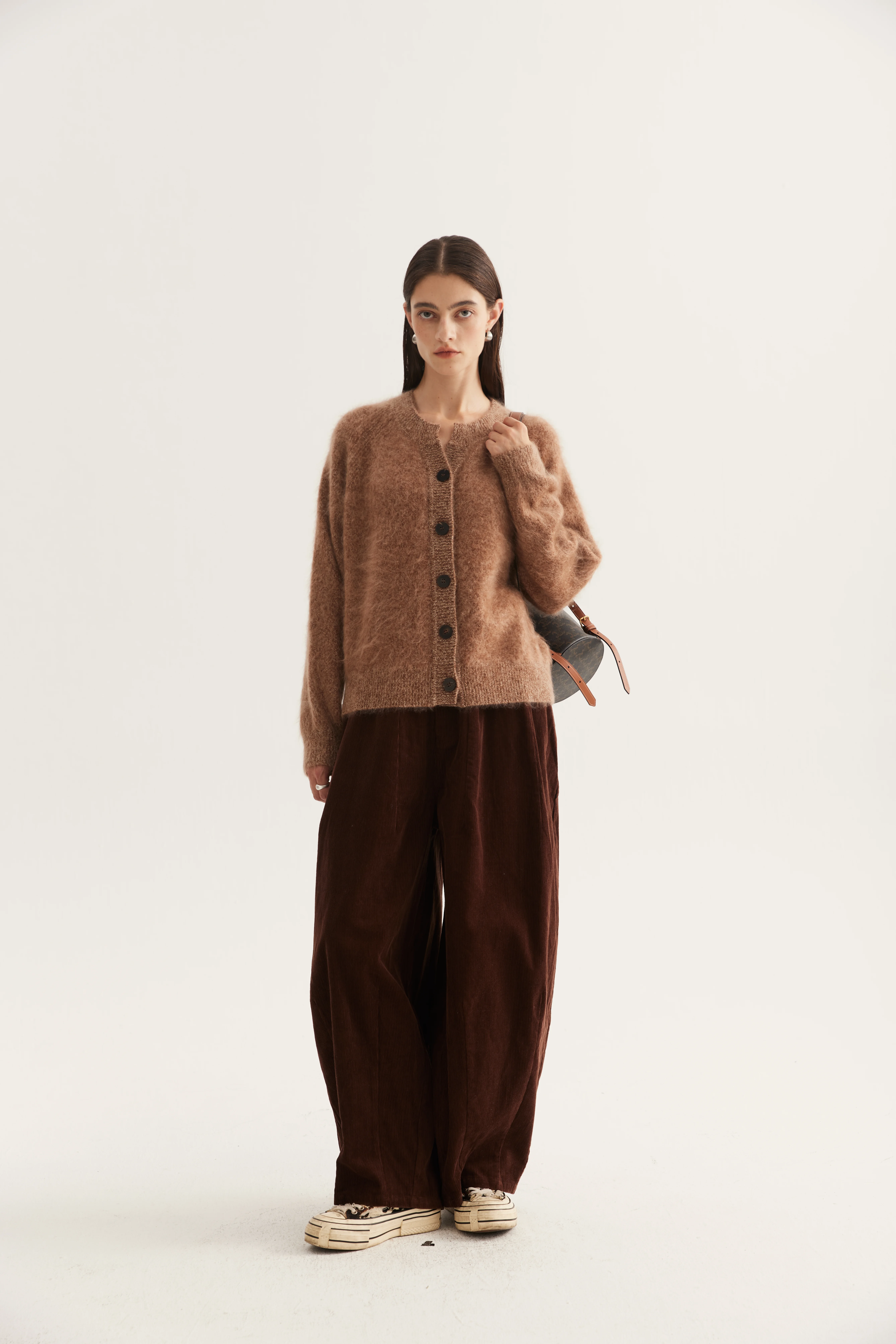
A brushed cashmere cardigan is developed as a complete garment result. LuMiao defines the intended halo, coverage and stitch visibility together with the front opening, edges, dimensions and care route, then connects fiber identity, pilling performance and dimensional change to the relevant material records and named test conditions.
Define an observable surface target
The brief defines how pronounced the halo should be, whether coverage should be even or directional, how much stitch definition should remain visible and where the surface should stop cleanly. These choices turn brushed into a measurable approval target.
Connect fiber identity to the material record
Supplier documentation, applicable labeling rules and the selected identification method establish cashmere identity, composition and fiber specification. The visual approval sample controls the surface result while the material record controls the fiber claim.
Develop the edges with the surface
Brushing changes how stitches, seams and transitions are perceived. The placket, neckline, cuffs, hem and closure area therefore need to be reviewed after the intended finishing route, with enough definition to preserve the agreed garment character and function.
Compare pilling results under one named method
Pilling depends on interacting fiber, yarn, structure, density, finishing and use conditions. A comparable grade includes the ISO 12945 route, specimen preparation, test duration and assessment conditions that produced it.
Make the approved sample the production reference
The approval set should connect the accepted surface appearance with garment measurements, edge definition, care condition and any required test record. Yarn count, gauge, weight, numerical tolerances, testing scope and timing remain specific to the actual project.
BUYER QUESTIONS
How is surface character evaluated on brushed cashmere?
Surface character is evaluated against the agreed halo, coverage, stitch visibility and hand direction. Overall quality also includes material, dimensions, workmanship, care and any named test requirement in the approved specification.
Which variables determine pilling performance?
Fiber, yarn construction, knit structure, density, finishing, wear and care interact. The project records the selected test method and conditions so the reported result has a precise meaning.
What should a buyer approve on a brushed cashmere sample?
Approve halo level and coverage, remaining stitch visibility, placket and edge definition, color and hand direction, garment measurements, the care condition and any named test requirement. The accepted sample should be retained as the visual reference.
How are two pilling grades compared?
Use the same ISO 12945 route, apparatus, cycle or duration, specimen preparation and assessment conditions. The shared method makes the reported grades directly comparable.