Direct answer
Let specialists own their components, but name one owner for the complete garment. Before assembly, freeze the shared pattern, finished measurements, seam allowances, stretch directions, component identities and approved version. After assembly, review balance, movement, openings, symmetry and seam appearance as one product.
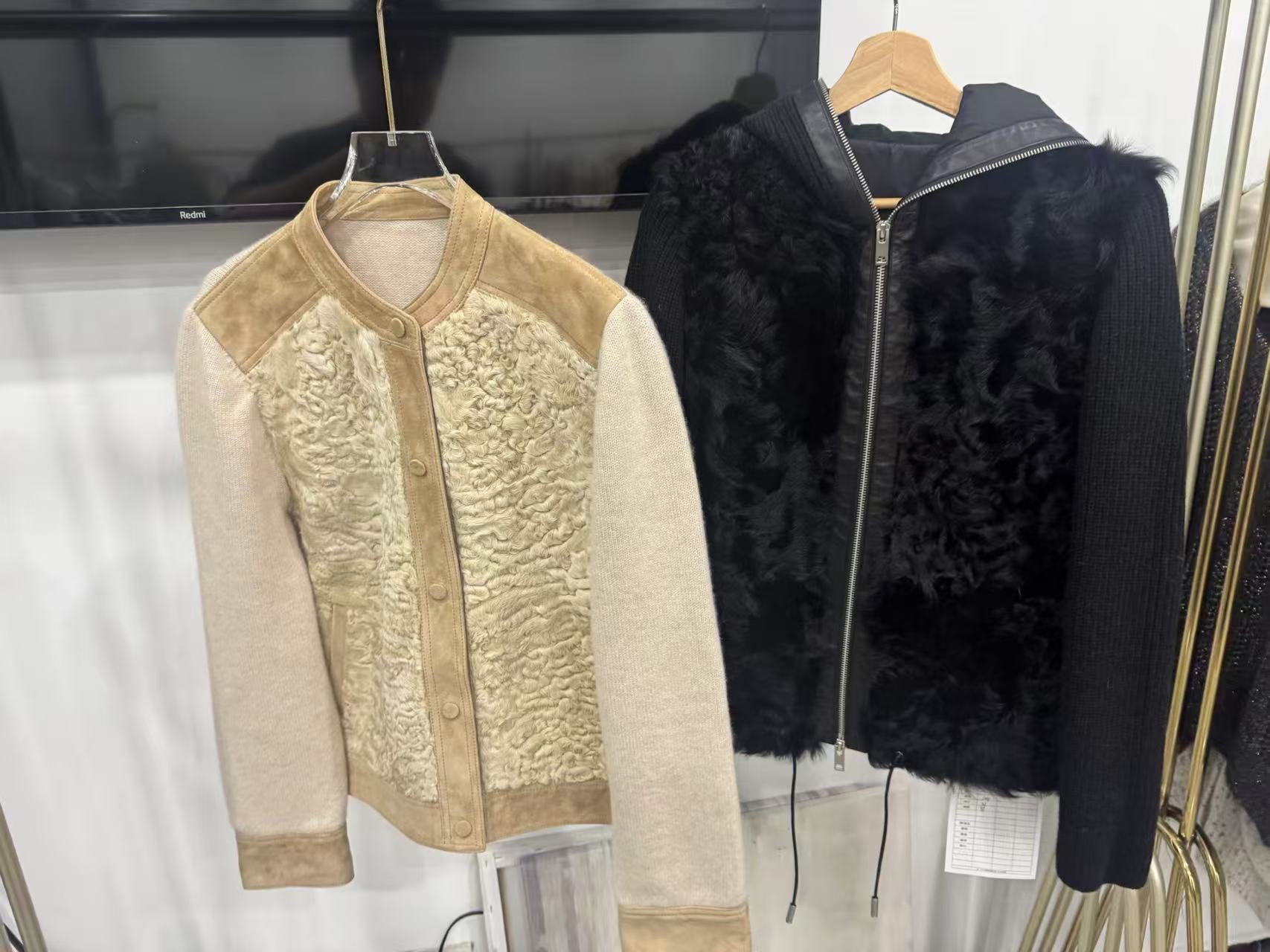
VISIBLE RECORD
Two specialist constructions still need one whole-garment decision.
These completed samples visibly combine knitted sleeves with different front-panel and trim constructions. The image does not prove fiber identity, internal workmanship, commercial terms or customer approval.
RESPONSIBILITY MAP
Component ownership is useful only when the whole garment still has one decision owner.
Knitted components
Confirm yarn direction, gauge, structure, density, dimensions, finishing state and linking quality.
Front-panel specialist
Confirm panel direction, cutting use, joining method, thickness transition and visible edge treatment.
Trims and openings
Treat zips, snaps, suede-like trims, lining, cuffs and hems as structural parts, not late additions.
One team owns the assembled sample.
That owner controls the shared version, resolves interface conflicts and can reject the complete garment even when each individual component passed its own check.
MINIMUM HANDOFF
Lock the shared facts before expensive components are joined.
Map every component
Identify knitted panels, front panels, trims, closures, lining and the specialist responsible for each part.
Freeze one assembly version
Use one paper pattern, one finished-measurement set, named seam allowances, stretch directions and component IDs.
Approve the joining sequence
Decide what must be reviewed before assembly and which operations would make later correction expensive or impossible.
Review the complete sample
Check opening, movement, balance, symmetry, seam appearance and the relationship between all materials together.
INTERFACE RISKS
The failure usually appears where one material system meets another.
| Interface question | What must be aligned | Complete-sample check |
|---|---|---|
| Thickness | Seam bulk, edge build-up and transition between panels | Flatness, comfort and visible step changes |
| Stretch and recovery | Direction, allowance and restraint at each joined edge | Movement, distortion and return after wear |
| Dimensions | Finished panel lengths, widths, seam allowances and tolerances | Hem balance, sleeve position and left-right symmetry |
| Openings and trims | Zip, snap, cuff, lining and facing dimensions | Closure alignment, entry, exit and ease of movement |
| Version control | Pattern, component IDs, material status and approved changes | All assembled parts belong to the same recorded sample |
CASE 20 / VISIBLE EVIDENCE
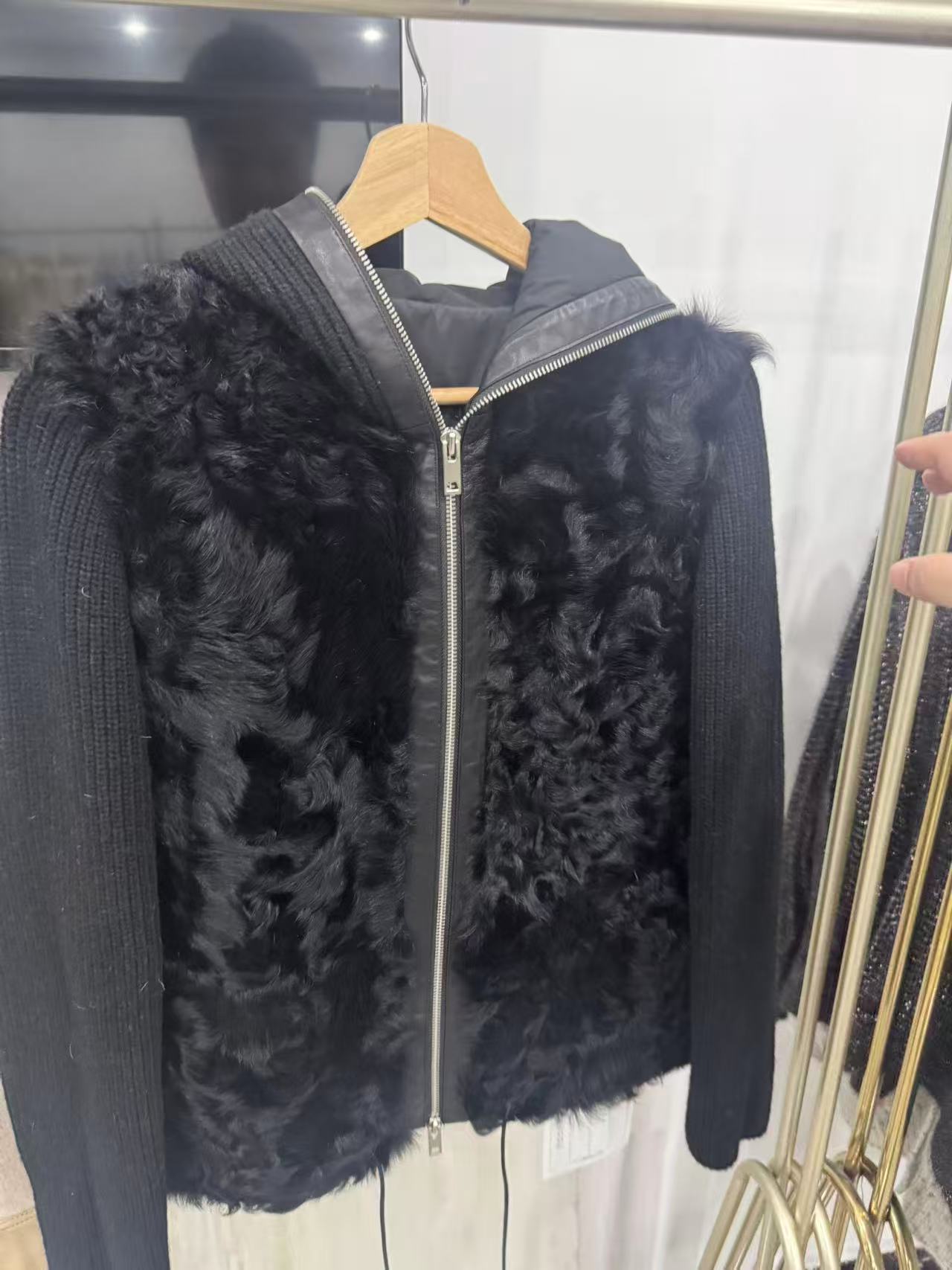
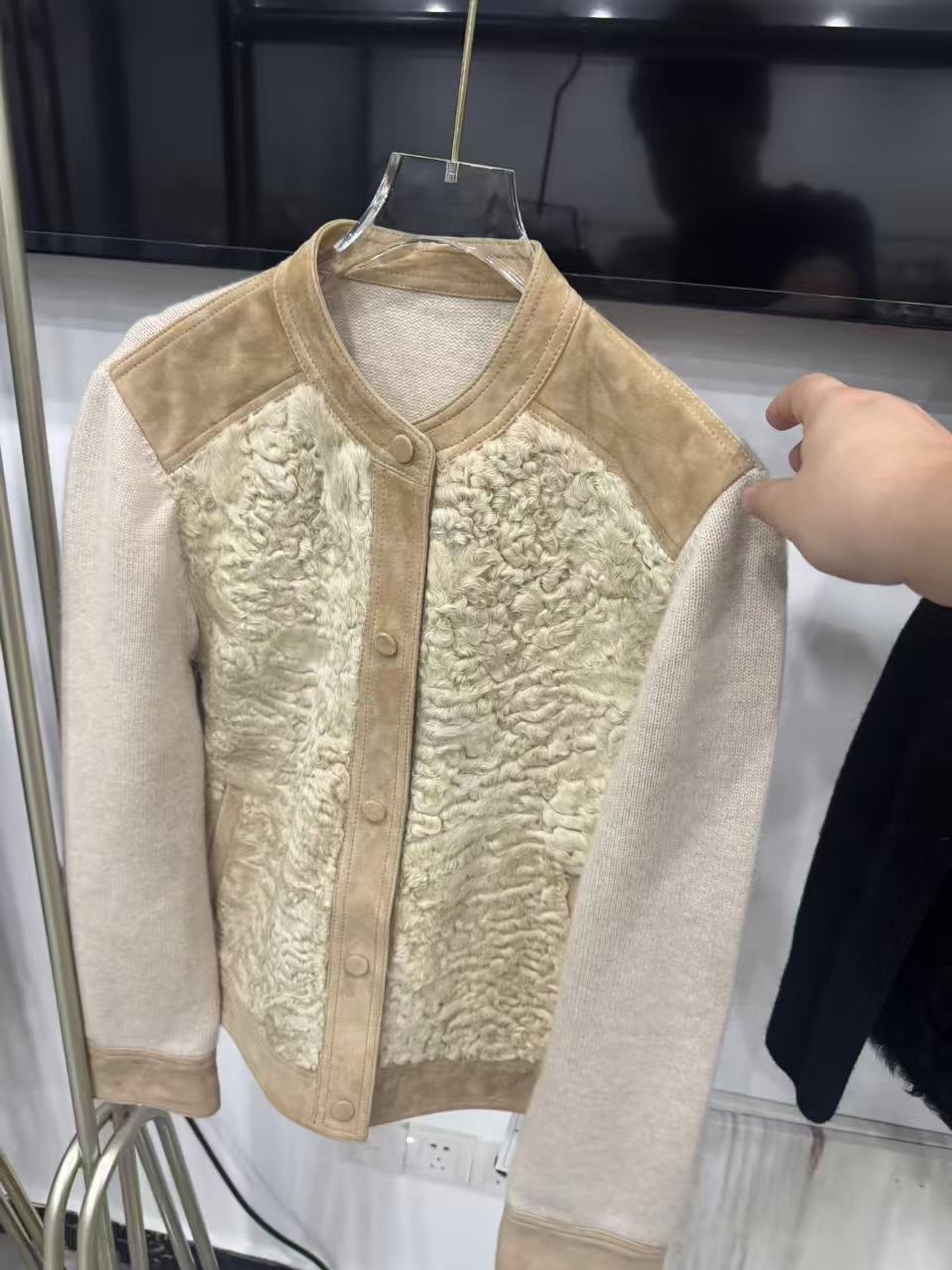
The sample photos support the structure discussion, not the missing commercial claims.
CLAIM BOUNDARY
Keep visible facts separate from facts that still need records.
What this record supports
- Two mixed-material samples were completed.
- Different visible panels, knitted sleeves, closures and trim areas meet in one garment.
- The interface requires one shared sample and responsibility chain.
What remains unproved
- Fiber, fur, leather or suede identity
- Named yarn supplier or fiber fineness
- Internal handwork and durability
- MOQ, price or comparable savings
- Customer approval, order, shipment or repeat production
CONNECTED DECISIONS
Use the next page that matches the unresolved decision.
Assign each sample one approval job
Return to the validation path when materials, construction or fit still need separate evidence.
Brief branchDefine the inputs before asking for a quote
Prepare the component map, materials, quantities and target decisions before commercial comparison.
Commercial contextPlace specialist coordination inside product development
See how references, material decisions, samples, approvals and production information stay connected.
Contact us with the component map and the next sample decision
Send the front and back reference, target materials, finished measurements, openings, trim details, quantity, timing, current sample version and the decision the next sample must resolve.