COLLECTION NOTES / 02
Quiet Texture, Subtle Light
Ten wool–cashmere pieces exploring raised stitches, open structures, marled colour and the light on knitted surfaces.
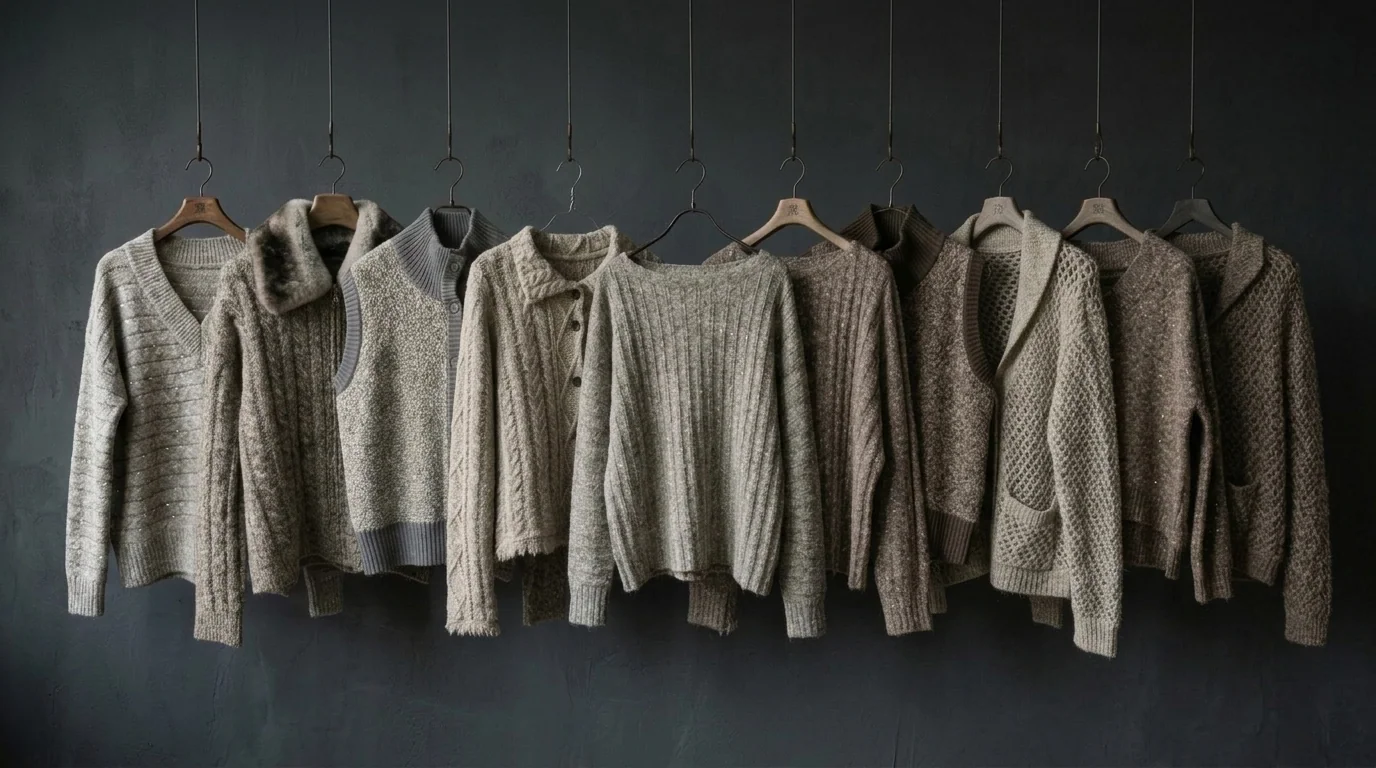
Shape begins at the surface
A cable catches the light along its raised edge and places a shadow beside it. A rib draws the eye downward. Open knitting reveals the space between the yarns. These small structural differences change the way a garment looks from a distance, even when the colours remain muted.
Across these ten pieces, wool–cashmere knitwear appears in ivory, stone, grey and warm taupe. There are cardigans with broad collars, pullovers with finer vertical or horizontal rhythms, and sleeveless vests with strongly defined borders. The collection is held together by attention to knitted texture, but each garment uses it differently.
Raised cables and defined outlines
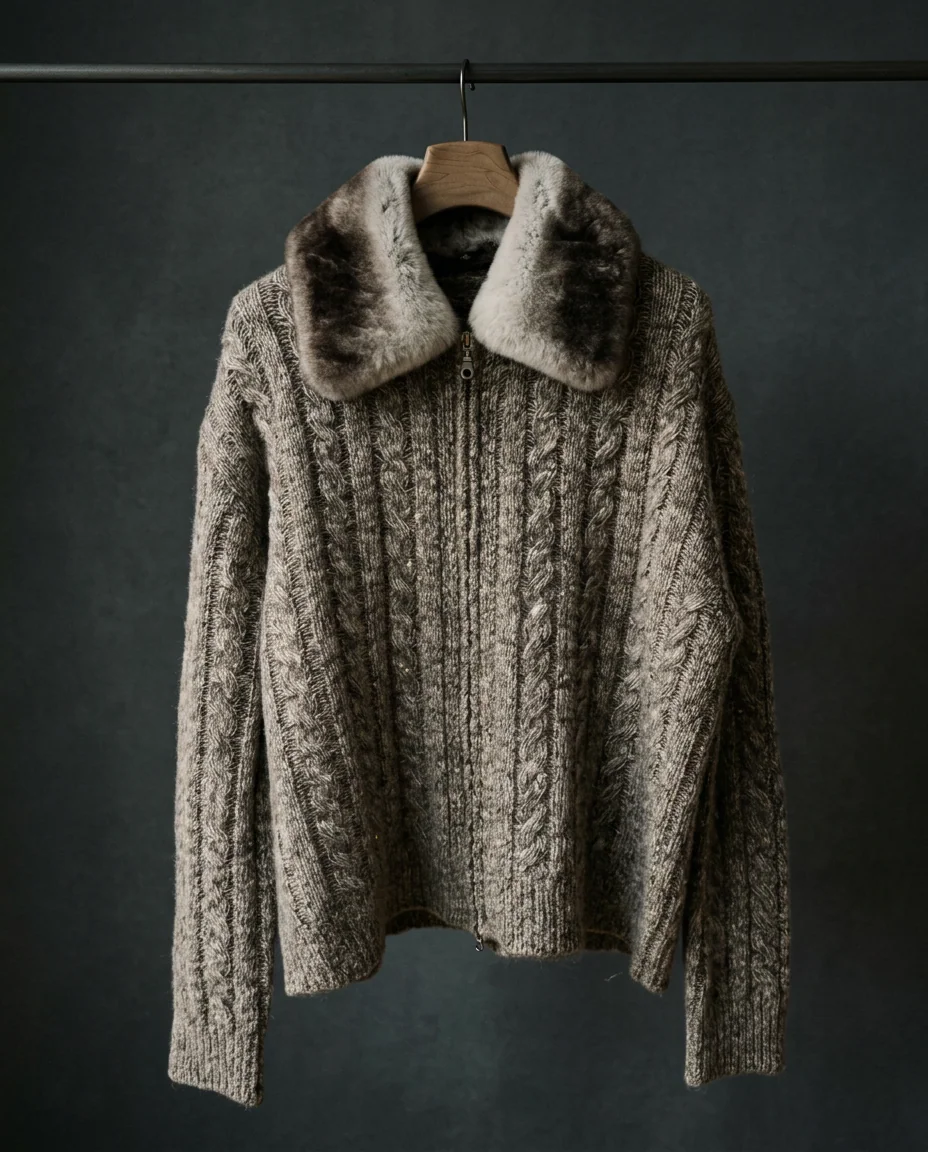
The zip-front jacket builds volume with pronounced vertical cables and a plush contrasting collar. Its raised surface and zipper give it the presence of a compact outer layer. A pale button-front cardigan uses another arrangement of strong cables running across the front and sleeves, with a soft collar and dark buttons giving the texture a clear frame.
The quieter pullovers explore scale. Narrow vertical ridges create a finer surface, while the ribs and horizontal sleeve textures introduce shifts in direction. The outline remains simple enough for those differences to be seen.
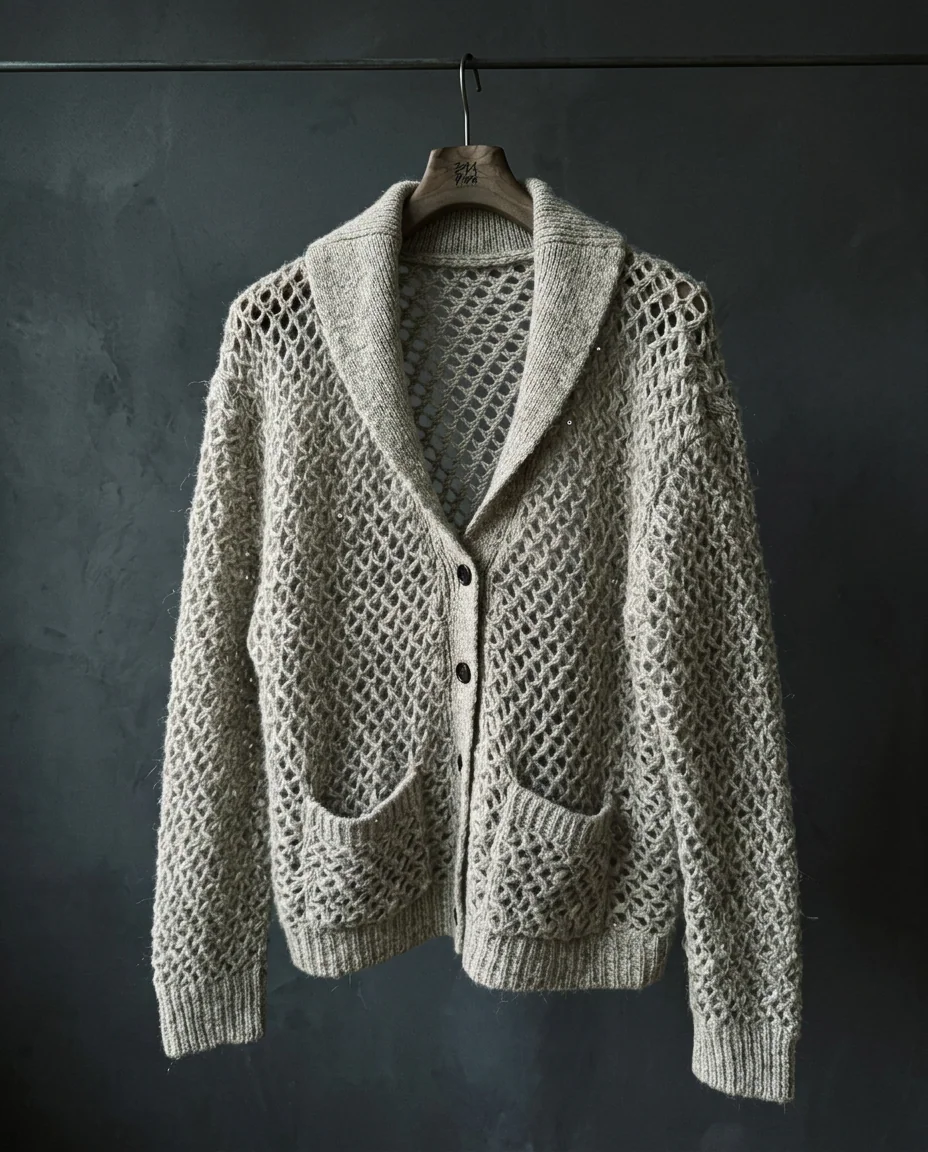
Openness needs an edge
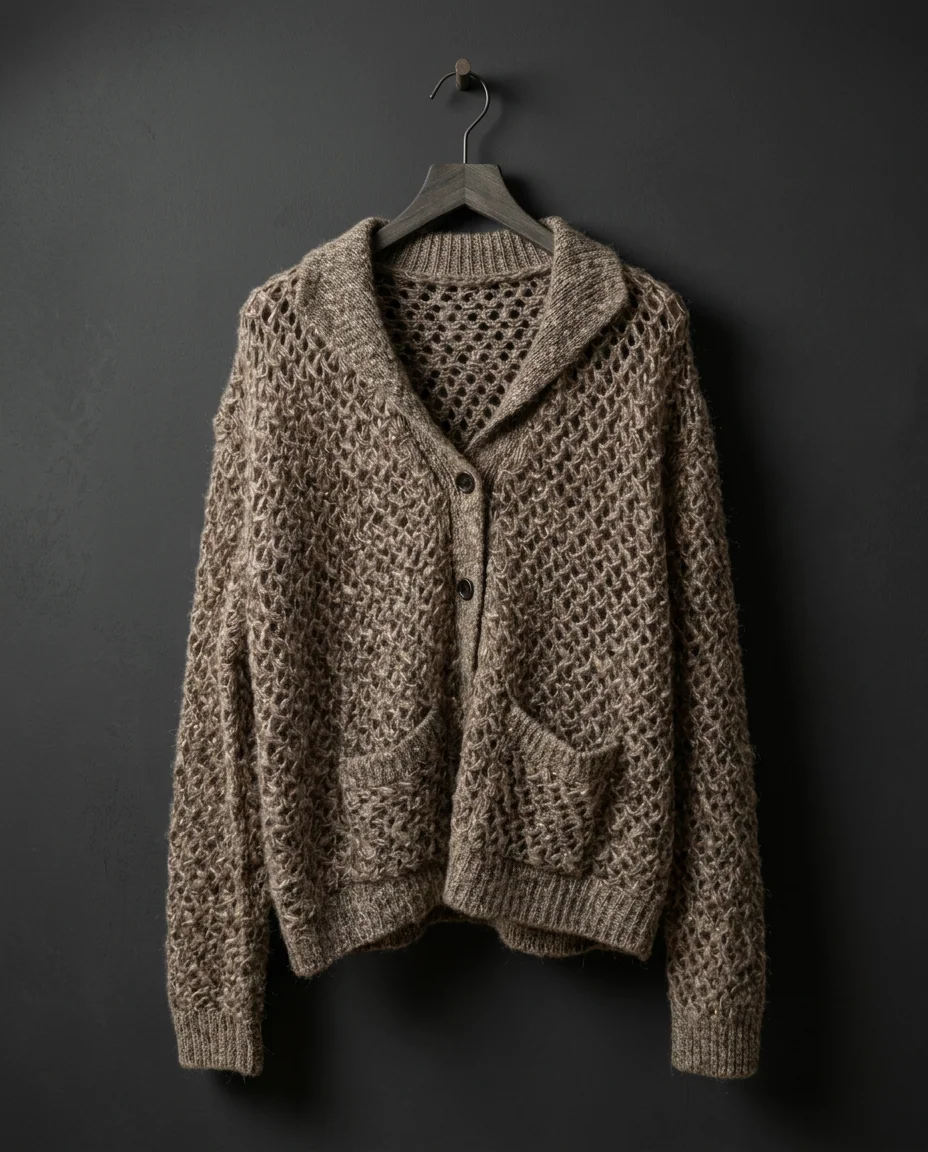
Two shawl-collar cardigans make space a visible part of the design. Their open stitches create a patterned, airy body. Around that body, more compact knitting outlines the shawl collar, button band, cuffs, hem and pockets. The contrast gives the garments their characteristic balance of open texture and recognisable shape.
Ivory places the stitch pattern in stronger visual contrast with the dark background or a contrasting layer. Taupe brings more attention to the softness of the yarn and to the shadows inside each opening. They are related pieces with noticeably different surface character.
A little light, woven into the rhythm
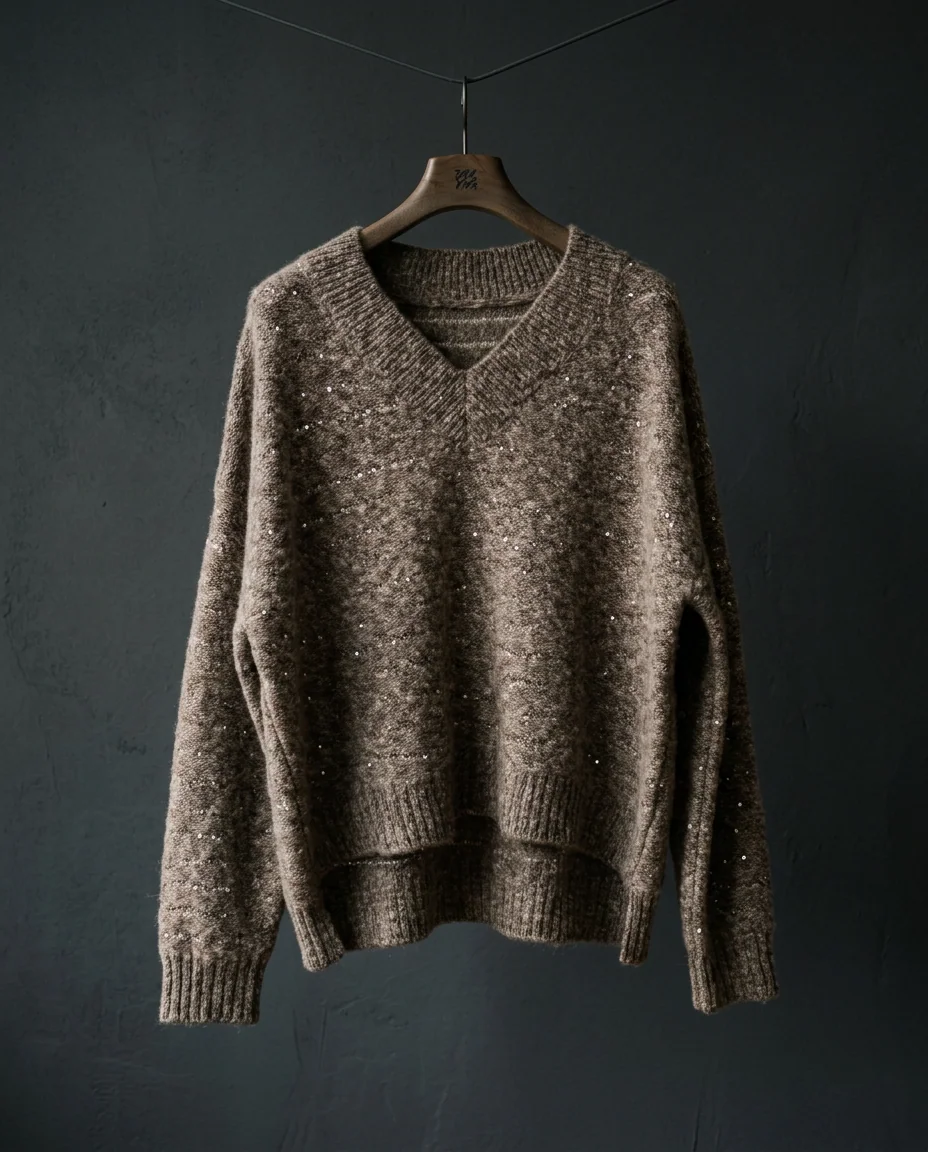
Several pullovers use small reflective points among the wool–cashmere stitches. On one, they sit within a vertical textured field. On the V-neck pieces, horizontal lines and occasional glints create a subtler rhythm across the chest and sleeves.
These effects are most interesting beside the familiar knitted elements: a ribbed neckline, a softly dropped shoulder, a textured cuff. As the lighting changes, the reflective details become more or less apparent, while the garment retains the feel of everyday knitwear.
Texture for layering
The two button-front vests close the collection with a different use of contrast. A finely mottled body is framed by broad ribs at the stand collar, front placket, armholes and hem. The darker taupe version feels earthy and compact; the pale grey version puts more emphasis on the difference between the speckled centre and its cooler borders.
Their sleeveless shape makes them natural layering pieces. They also offer another way to develop the collection's central idea: textured fabric contained by a clean, deliberate outline.
For a brand, this language can extend toward larger or finer cable scales, more open surfaces, a different balance of reflective detail, or new garment proportions. LuMiao can develop the yarn, stitch, construction and finishing around that direction.
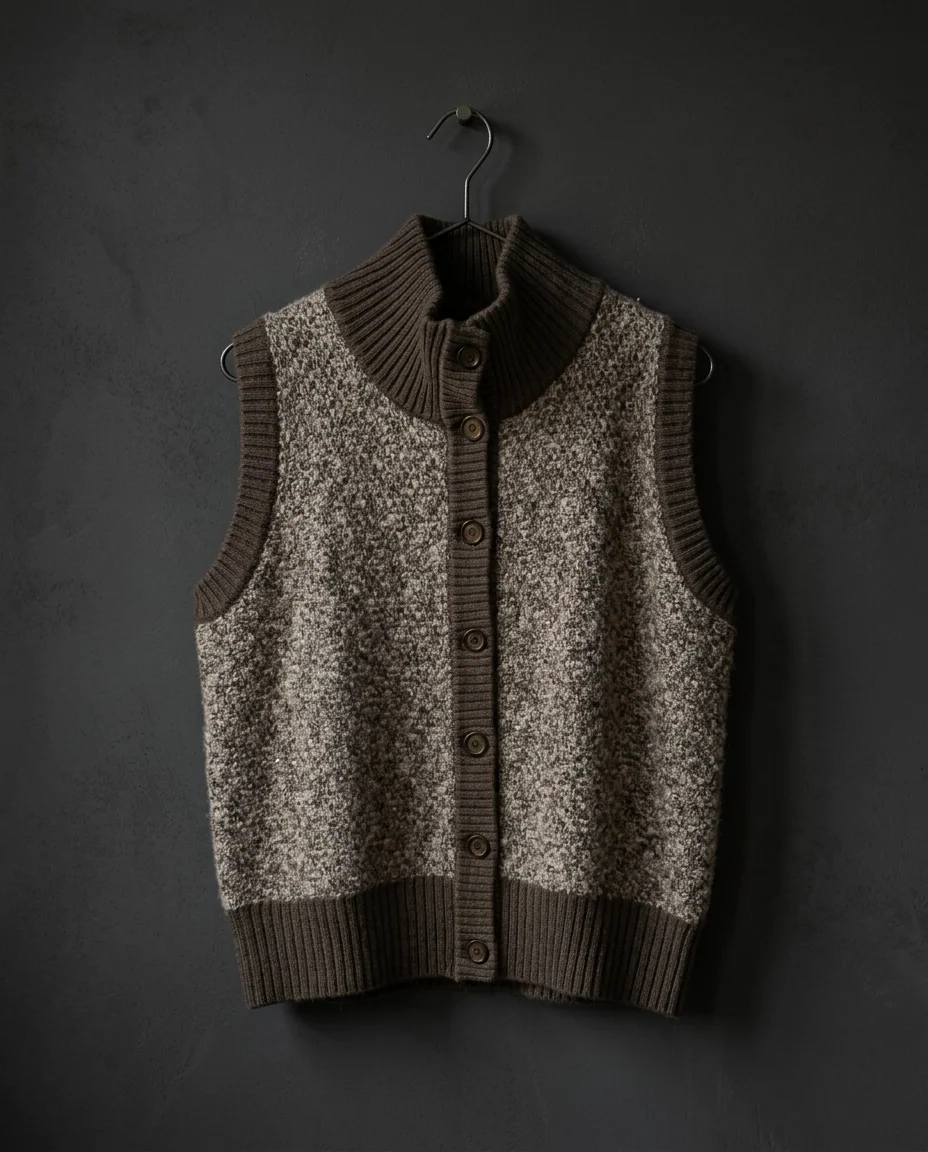
Image references
The lookbook combines supplied model, studio and yarn visualisations with garment-reference and stitch-detail images. Open “Garment & detail” beside a piece to compare its supplied views.
The zip-front jacket detail follows the supplied image for that piece. Its preparation method is unrecorded. Yarn pairings follow the collection colour groups; yarn specifications are recorded separately from finished-garment composition.